Should you get bangs? Try them on your photo first
Bangs are the one haircut you cannot undo at home, and a blunt fringe takes six to twelve months to grow back into your length. HairGlam puts curtain, blunt, wispy, side swept and long bangs on your face in a few seconds each, so you find out before the scissors do.
Free to download. iPhone, iOS 15.1 or later. ★★★★★ 5.0 from 2 ratings on the App Store.
So, should you get bangs?
Three things decide it, and none of them are the celebrity photo you saved. You can check all three in about a minute, standing in front of a mirror.
Your hairline decides more than your face shape
Every bangs chart online sorts people by face shape, and face shape does matter, but the thing that decides whether a fringe behaves is the hair at the very front of your head. Push your dry hair forward from the crown. If a piece near the hairline swirls, splits or springs straight back up, that is a cowlick, and a blunt fringe cut across it will part itself in the same spot every day. A stylist can work around one by taking a deeper section, but you want to know it is there before you sit down.
Your texture decides which fringe is even possible
Straight, medium thick hair can wear any of the five shapes below. Fine hair does well with wispy or curtain bangs and struggles with a heavy blunt line, because that line has to be cut from a section of hair wide enough to cover your whole forehead. Wavy hair wants a bit of extra length so the bend has somewhere to go. Curly hair has to be cut dry, since a fringe cut at eyebrow level while wet ends up somewhere near your hairline once it dries.
Your morning decides whether you keep them
This is where most bangs regret actually starts. A fringe sits on your forehead, so it picks up oil and sunscreen faster than the rest of your hair and needs washing on days you would otherwise skip. Most shapes want two minutes with a brush and a dryer to lie flat, and all of them want a trim every three to four weeks, because a quarter inch of growth is the difference between brow skimming and in your eyes.
The fastest way to settle the argument
Read the five shapes below, rule out the ones your texture will not do, then render the survivors on a photo of your own face. That is the whole job of HairGlam: the fringe goes onto your photo instead of onto a model, so you are judging your hairline and your forehead rather than someone else's. If you are not sure what suits your proportions in the first place, start with what haircut suits me, or read the round face guide if that is your shape.
The five kinds of bangs
They are not interchangeable. Each one asks for a different texture and a different amount of your morning.
Curtain bangs
Parted in the middle and cut on a soft diagonal, shortest around the cheekbone and blending into your length by the jaw. They suit almost everybody, and they are the safest choice on a round or square face because that diagonal draws a longer line down the center. Fine to medium hair carries them well, since they are not asking for density, and both straight and wavy textures work.
Upkeep: a round brush and about two minutes on wash days to set the bend outward. Trims every six to eight weeks, and they grow out into face framing layers rather than into a problem.
Blunt or full bangs
One solid line straight across the forehead at or just above the brows, cut from a deep section so nothing shows through it. This is the fringe with the most impact and the least forgiveness. It wants thick, straight hair, and it flatters a long or oval face because it visibly shortens the forehead. On a round face it can widen the middle of the face, and on fine hair it reads as thin rather than sharp.
Upkeep: the highest of the five. Blow dry it flat every wash, wash the fringe on its own between washes because your forehead gets to it first, and trim every three to four weeks or it will sit in your eyes.
Wispy bangs
A thinner fringe, point cut at the ends so light passes through it and your brows stay visible. Because it comes from a shallower section, it is the fringe fine hair can genuinely wear, and it softens a strong forehead or a heart shaped face without committing you to a heavy line. On very thick hair it needs proper thinning, or it just looks like a blunt fringe growing out unevenly.
Upkeep: moderate. It separates into strands as soon as it gets oily, so dry shampoo at the roots is part of the deal. Trims every four to six weeks.
Side swept bangs
Longer pieces cut on a diagonal and worn across the forehead from a deep side part. It is the least drastic of the five and the easiest to walk back, because on a bad day it tucks behind your ear. It softens a square jaw and balances a heart shaped face. The one thing that stops it working is a cowlick at your part, which will push the hair back the other way by lunchtime.
Upkeep: the lowest of the five. Blow dry it across the direction it grows, not with it. Trims every six to eight weeks, and there is no stage of the grow out you have to hide.
Birkin or long bangs
Full across the front like a blunt fringe but longer, sitting on or just under the brows with softened, lived in ends and slightly longer corners. It is the version of a heavy fringe that does not feel like a haircut you have to explain to people. It wants medium to thick hair in a straight or gently wavy texture, and it suits oval and longer faces best.
Upkeep: moderate to high. Long enough to blink under is a narrow window, so trims land every four to five weeks. Expect a blow dry on wash days and a lot of tucking behind your ears in humidity.
Reasons not to get bangs
Nobody selling you a haircut leads with these. They are the things that turn a good fringe into six months of pinning it back.
A cowlick at your hairline
A swirl of growth at the front is the single most common reason a fringe never sits the way it did in the salon. The stylist blow dried it into submission once. At home, the hair goes back to growing the direction it wants and splits open in the middle. If you have one, side swept bangs are usually a fight and a slightly longer curtain shape is usually the peace treaty.
Very fine hair
A full fringe has to be cut from a section deep enough to cover your forehead solidly. On fine hair, that section is taking density from the hair behind it, so you can end up with a see through fringe and flatter hair everywhere else. Wispy or curtain bangs are the version that works, because they are meant to look light rather than accidentally looking thin.
Very curly hair, cut wet
Curls shrink as they dry, and the shorter the hair, the more dramatic the difference. A fringe cut at eyebrow level on wet curls can end up sitting well above the brows. It is not a reason to avoid bangs, it is a reason to only let someone who cuts curly hair dry, curl by curl, near your forehead.
An oily forehead
Hair sits on your skin all day and collects sunscreen, sweat and whatever product is in it. If your forehead is already the oily part of your face, expect to be washing the fringe on its own every day or two, and expect it to separate into strands by the afternoon on the days you skip. Plenty of people wear bangs with no issue at all, but if this is already a sore point, treat it as a real factor rather than a small one.
Glasses
The fringe and the top of your frames are competing for the same couple of inches. It works when the fringe ends clearly above the frame line or sweeps outside it. It looks heavy when the ends land exactly on the top rim, and the ends will leave marks on the lens. Take your glasses to the appointment and put them on before the last snip, not after.
The grow out, honestly
Hair grows around half an inch a month. From a short blunt fringe, that is roughly six months to chin length and closer to a year before it disappears into a layer, with a long stretch in the middle where it is too short to tuck and too long to see past. Curtain and side swept shapes are the ones that grow out gracefully. A blunt fringe is the one people regret in month three.
Test all five on your own photo in ten minutes
The try on runs on one selfie, and you can put every fringe on the same photo so the comparison is fair.
Take the photo with your forehead clear
Pull all your hair back, face the camera straight on, and use daylight rather than a bathroom bulb. No hat, no sunglasses. Bangs are the one style where the app needs a clean look at your hairline, because that is exactly the part it is changing.
Try the whole set, not your favorite
Open Discover, search for bangs, and work through curtain, blunt, wispy, side swept and long on the same photo. The one you were sure about is often not the one that looks right. Judging them against each other is the point.
Save two and sleep on it
Keep your two best in Saved and look again the next morning, when the novelty has worn off. Then take the winner to your stylist. A render on your own face is a far clearer brief than a photo of someone else with different hair.
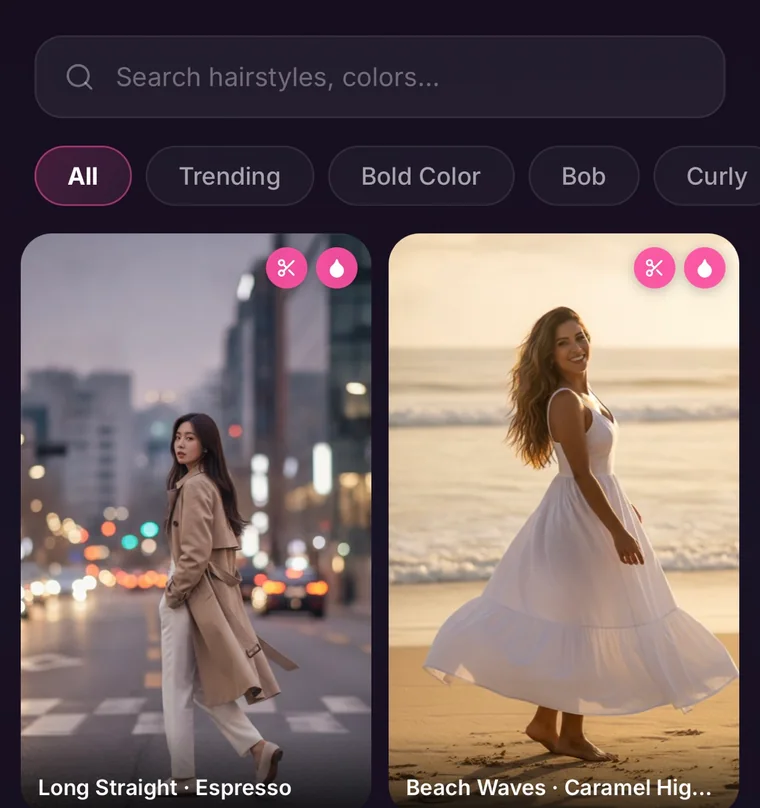
Discover is where you go once you know what you are looking for. Type into the search field, or narrow things down with the All, Trending, Bold Color, Bob and Curly chips. Every card is labeled cut then color, so a card like Long Straight and Espresso tells you both halves of the look before you tap it. The color half is its own decision with its own costs, and the hair color try on page takes that one apart properly.
Before you book the appointment
How the try on works
What makes a good upload, what the render actually changes, and what to expect from the result.
What haircut suits me?
Work out your face shape first, then see which cuts flatter it instead of guessing from a chart.
Haircuts for a round face
Why the diagonal fringe wins on a round face, and which lengths do the rest of the work.
The whole app
299 cuts, colors and makeup looks, from bobs and pixies to platinum blonde, all on your own photo.
Bangs questions, answered straight
Should I get bangs?
Do bangs suit a round face?
Which bangs work on fine hair?
Can you get bangs with curly hair?
Do bangs work with glasses?
How long do bangs take to grow out?
Is there a bangs filter that uses my own photo?
Is HairGlam free?
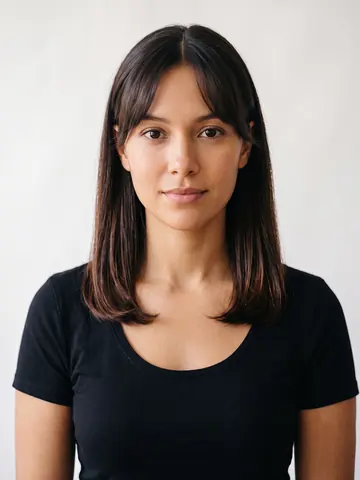 Curtain Bangs Mid
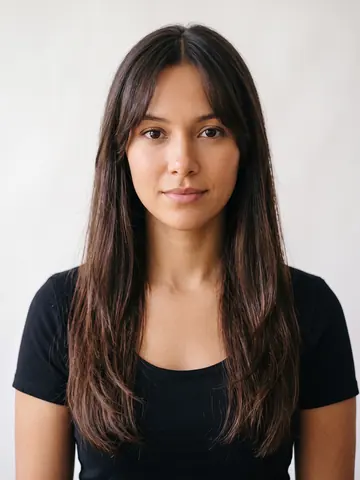 Curtain Bangs Long
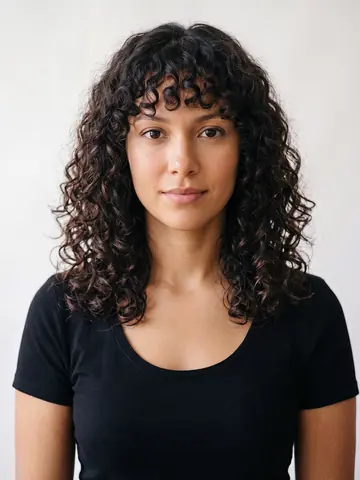 Curly Bangs
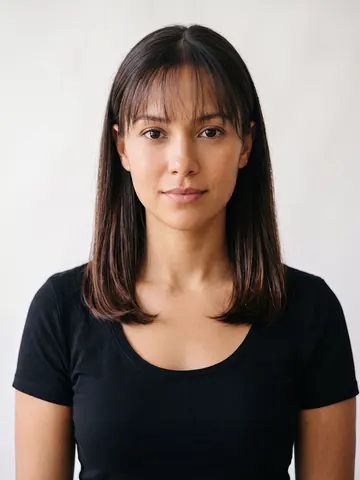 Wispy Bangs
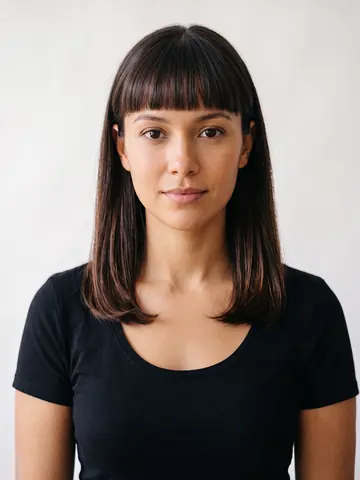 Blunt Bangs
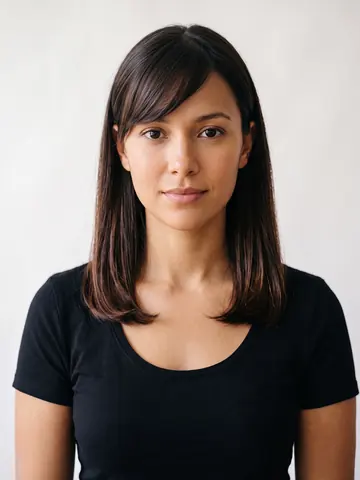 Side Swept Bangs
Wear the fringe for five minutes before you wear it for a year
Curtain, blunt, wispy, side swept and long, all rendered on the photo already on your phone. You will know before your next appointment.

Free to download. iPhone, iOS 15.1 or later.