See the cut on your own head, before the clippers start
Upload one photo. HairGlam puts a low taper, a skin fade, a buzz, a textured crop or a mullet on your face, with your hairline and your beard where they actually are. Then you take the render into the shop as the reference photo.
Free to download. iPhone, iOS 15.1 or later. ★★★★★ 5.0 from 2 ratings on the App Store.

The cuts men actually ask for
Nine cuts cover most of what walks into a barbershop. Here is what to say, who each one suits, and how long it holds its shape.
Low taper fade
Ask for a low taper that starts just above the ear and around the nape, dropping to a 0.5 or a 1 at the bottom, with the sides left on a 2 or a 3 and scissor work on top. It suits almost every face and every hair type, which is why barbers default to it. Sharp for about two weeks, still deliberate at four.
Buzz cut
One guard over the whole head, usually a 1 (roughly 3mm) or a 2 (6mm), with a light taper at the ears and neck so the edges are not blunt. It wants an even skull and a defined jaw, and it is the most honest cut on this list. Three to four weeks, and you can run the clippers yourself.
Textured crop with a fringe
Two to three inches on top, point cut for texture, pushed forward into a blunt or a messy fringe, sides on a 1 or a 2 with a taper. Best on straight to wavy hair, and the cut to ask for if you want less forehead on show. Six weeks between visits, matte clay in the morning.
Mid or high skin fade
A fade that goes bare at the bottom and starts around temple height for a mid, above it for a high, blended into whatever is left on top. It adds height, so it lengthens a round face. It also has the shortest shelf life here: the line looks fuzzy in ten to fourteen days.
Slick back with an undercut
Sides taken to one length, a 1 or a 2, either blended or fully disconnected, with four inches or more left on top and combed straight back. It needs thick, straight hair and a hairline you are happy to put on display. Sides need tidying at four weeks, the top can go much longer.
Modern mullet
Short and textured through the front and sides, weight kept at the back so it sits on the collar, with a soft taper rather than a hard disconnect unless you want the eighties version. Wavy and curly hair carry it best. Six to eight weeks, and it grows out into something you can still wear.
Curtains, or a middle part
Four to six inches at the front, layered so it splits and falls either side of a center part, sides scissor cut or lightly tapered. It needs density and a hairline that still holds a part in the middle. Eight weeks or more, since length is the whole point and growth only helps.
Edgar
A blunt, straight line across the fringe, a high or drop fade underneath, and a hard line at the temples. Thick straight hair holds it best, and it squares off a rounder face. The blunt line is the first thing to lose its edge, so plan on two weeks, three at the outside.
Pompadour
Four to five inches at the front, graduating shorter toward the crown, with a taper fade or a scissor taper at the sides. It wants thick hair and a blow dryer, because the volume is built in rather than cut in. Four to five weeks for the sides, ten minutes every morning for the shape.
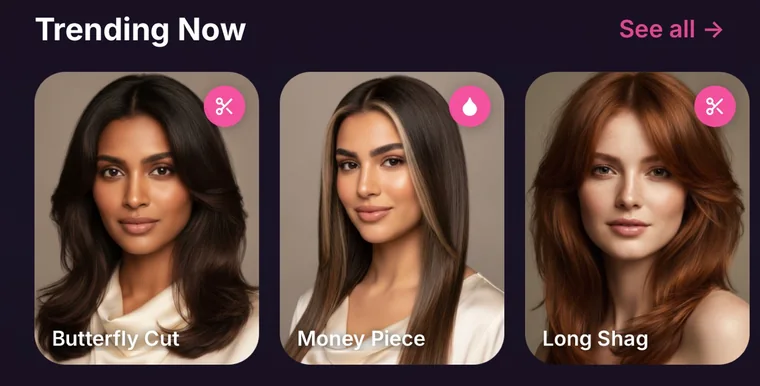
The Trending row moves with what people are asking for. Tap a look and it renders on your photo instead of on the tile.
If your hairline is moving
Most of the cuts above assume a hairline that is staying put. Plenty of hairlines are not.
A receding hairline usually goes at the temples first, leaving the middle further forward than the corners. Thinning at the crown is a separate thing and shows up under overhead light, which is why you tend to notice it in a photo somebody else took. Neither one rules out a good haircut. What they change is which cuts are working with you and which ones are quietly working against you. This is a haircut page and not a medical one: nothing here treats hair loss, and if that is the part you want to deal with, a doctor is the right person to ask.
Cuts that are honest about it
A buzz cut, because when the sides and the top are the same length there is nothing for a thin patch to contrast against. A short textured crop with the fringe brought forward, because the weight sits over the temples instead of exposing them. A taper with a short, textured top, for the same reason. These read as decisions rather than as coverage.
Cuts that fight it
Slick backs and pompadours pull everything off the face, so they put the hairline center stage. Curtains need a part in the middle to hold, which thinning at the front will not do. A long top combed over a receding corner tends to separate and show more scalp than the shorter version would.
The crown is a different problem
A thin crown shows most when the hair around it is long and lies flat. Shorter, textured, and left slightly messy hides far more than length combed neatly over the top. If you go very short at the sides with a high fade, check the back of your head in the render too, since a high fade pulls the eye up toward the crown.
Why the render is useful here
HairGlam works from your photo, so it renders your hairline as it is rather than drawing you the one from the catalog picture. That is the only way to see whether a crop actually sits where you want it against your temples, or whether a fade makes the top look sparser by comparison. Try three, keep the one that looks like you.
Face shape, kept short
Four shapes cover most men, and one rule sits under all of them: hair adds width where you leave it, so leave it where the face is narrow. Not sure which one you are? The face shape guide shows you how to check.
Square
The jaw is already doing the work. Keep the sides tight so nothing widens the face further, and put texture rather than bulk on top. Tapers, crops and buzz cuts all land. Avoid heavy square fringes, which double up on the angles you already have.
Round
You want height and a vertical line. Mid or high fades with volume on top, a pompadour, or a quiff. Keep the sides short so the widest point of your head is not level with your cheeks. A blunt fringe sitting low across the forehead works against you here.
Oval
The one that takes nearly everything, which is not as useful as it sounds because it means the decision is down to your hair type and upkeep instead. The one thing to watch: a very heavy fringe can shorten the face more than you intended.
Long or oblong
Do not add height. A tall pompadour over a high skin fade stretches a long face further. Keep some weight at the sides, and let a fringe come forward to shorten the forehead. Curtains and textured crops suit this shape well.
Try it, then take it to the shop
Three steps, and the last one is the reason to bother.
Upload one photo
Straight on, in daylight, no hat, no sunglasses. There is no account to make and nothing to sign in to. If you have a beard, keep it in frame: it stays in the render.
Pick the cut
Type fade, crop or mullet straight into the Discover search rather than scrolling the rows, which lean toward longer looks. Run three, not one: the cut you already wanted and the two either side of it in length, so you have something to judge it against.
Save it and show the barber
The render is your reference photo. Handing over a picture of your own head, with the fade height and the length already visible, beats holding up an actor with different hair and hoping.
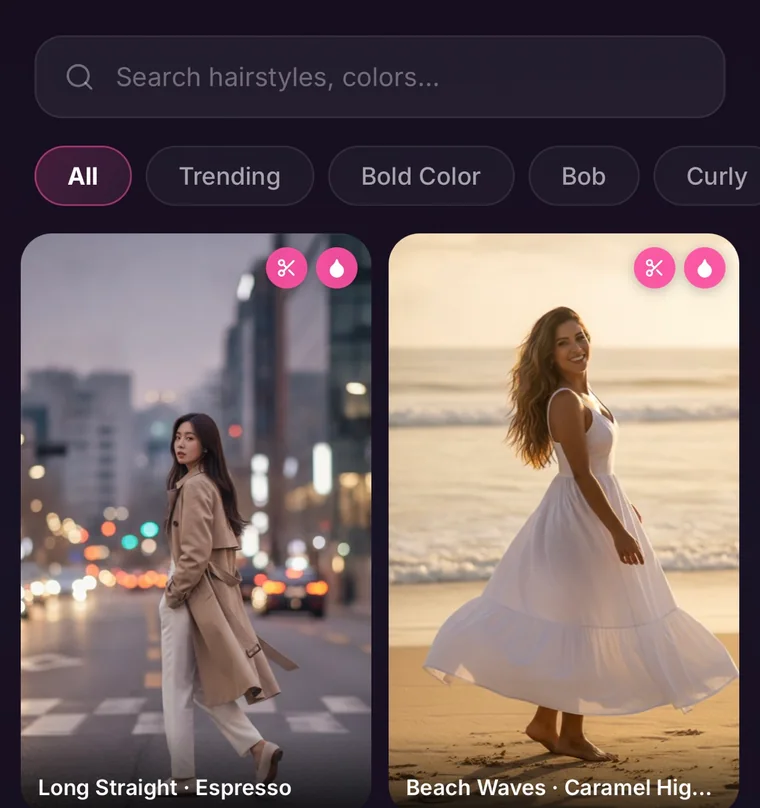
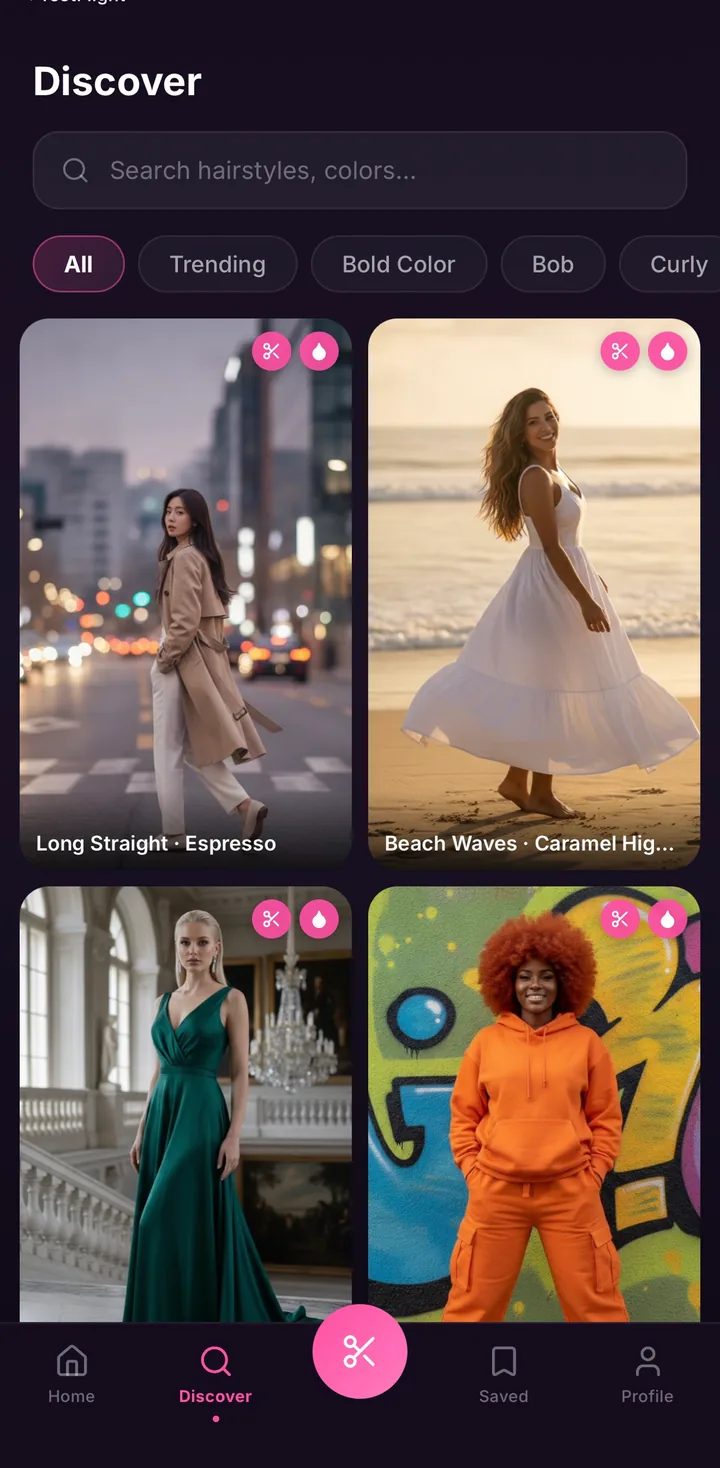
Discover. Type "fade" or "crop" into the search field, or filter down with the chips. Every card names the cut and the color, so a Long Straight in Espresso is one tap from a shorter version in the same shade. If the shade is the question, whether that is covering gray, going darker or leaving it silver, the hair color try on page has all 105 of them broken down by family.
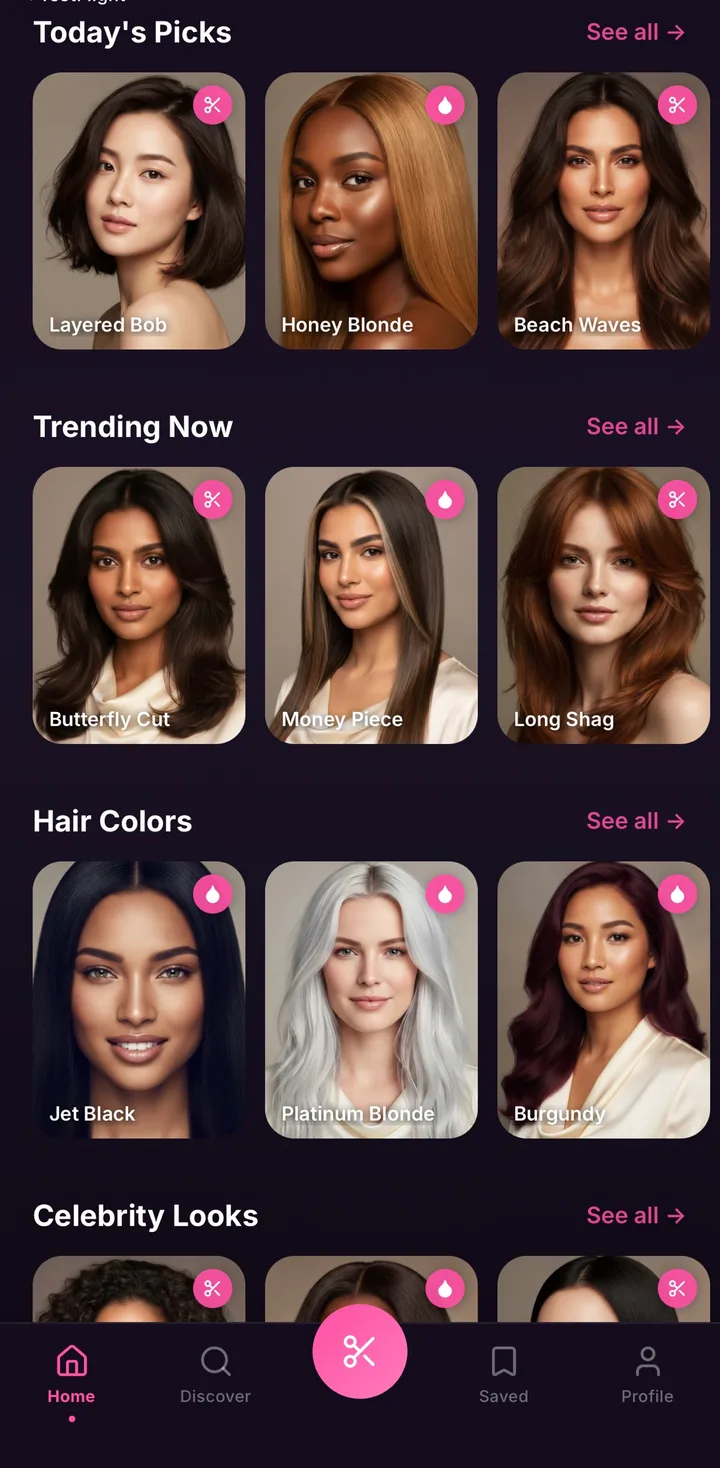
How the try on works
What the AI does with your photo, what a good photo looks like, and what to expect back.
What haircut suits me?
Work out your face shape properly, then see the cuts that fit it on your own photo.
HairGlam home
The whole app in one page: 299 cuts, colors and makeup looks, rendered on your face in seconds.
Questions before you download
What haircut suits my face if I am a man?
Does it do fades?
Will it work if I have a beard?
Can I see a buzz cut before I shave my head?
Does it work if my hairline is receding?
Is it free?
What photo should I use?
Can I show the result to my barber?
Try these on your own photo
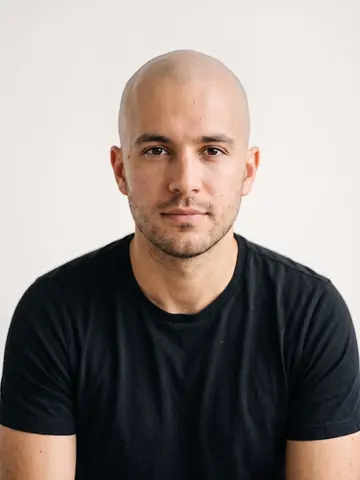 Baldy
Baldy Buzz Cut
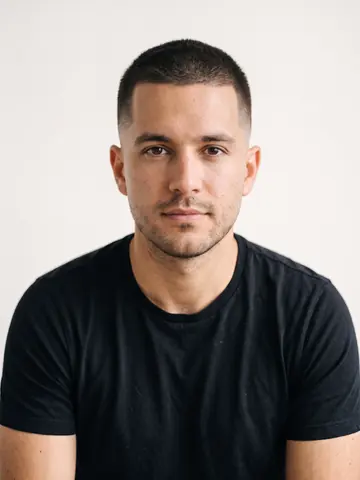 Buzz Cut Fade
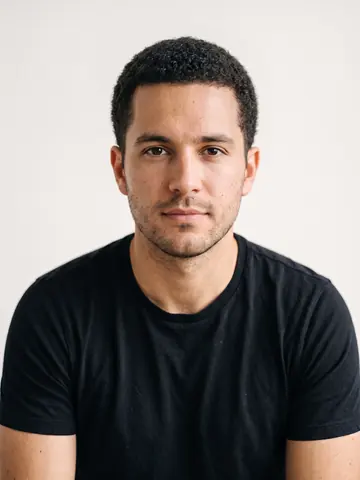 TWA Close Cut
 Pompadour
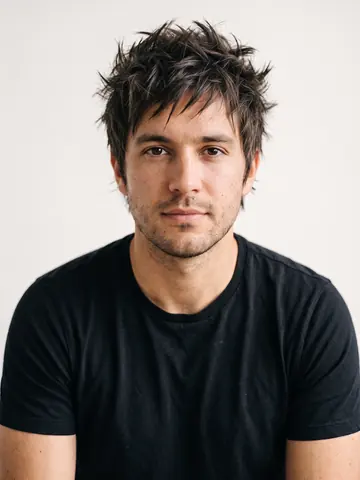 Razor Textured Punk

Decide before the chair, not in it
One photo, then the fade, the crop or the buzz on your own head. Keep the one that works and hand it to the barber.

Free to download. iPhone, iOS 15.1 or later.