What haircut suits me? Find your face shape, then see the cut on your own photo
Three questions tell you which of the six face shapes you are closest to. Each shape comes with the cuts that work with it and why. Then, because a chart can only get you to a shortlist, you put the shortlist on your own photo and look at the actual answer.
Free to download. iPhone, iOS 15.1 or later. ★★★★★ 5.0 from 2 ratings on the App Store.
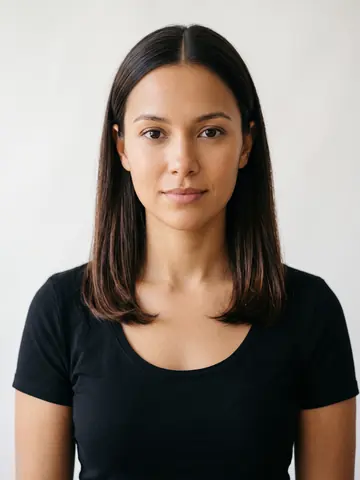
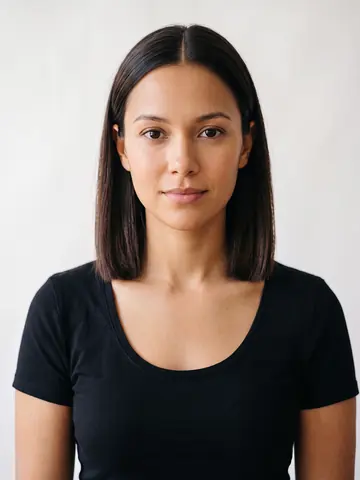
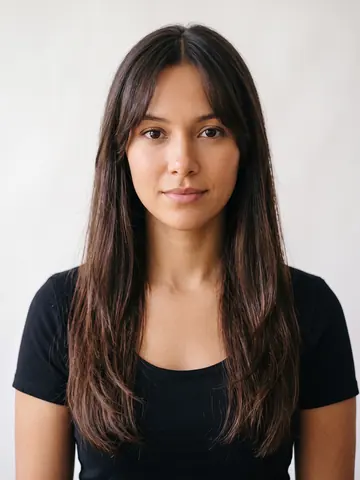
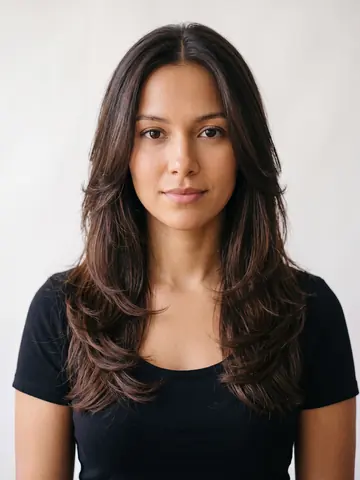
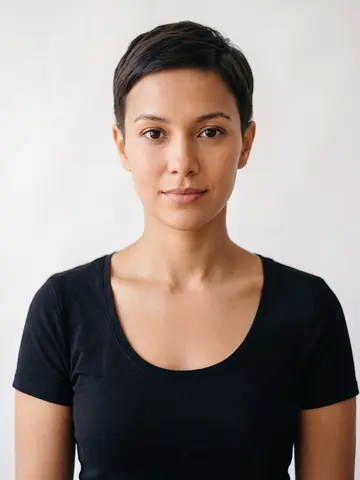
One studio portrait, four cuts, same face and same light. These renders use the same edit instruction HairGlam runs on your photo.
Find your face shape in three questions
Pull your hair back and stand in even light. Answer from a straight on mirror or a straight on photo, not from memory.
Prefer measurements? How to know your face shape uses a tape measure and four numbers.
The six face shapes, with cuts that work for each
What each shape is asking a haircut to do, and four cuts from the catalog that do it. Every cut opens a page you can try on your own photo.
Oval
Noticeably longer than it is wide, forehead a touch broader than the jaw, and the chin curves rather than corners. Almost everything works, which is less helpful than it sounds. Because there is nothing to correct, pick for interest instead: a blunt collarbone cut, curtain bangs, or long layers that start at the jaw. The one thing to watch is very heavy, flat length, which can drag an oval face into looking long.
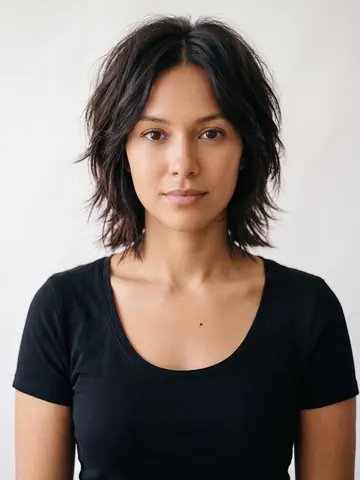 Shag Cut Short
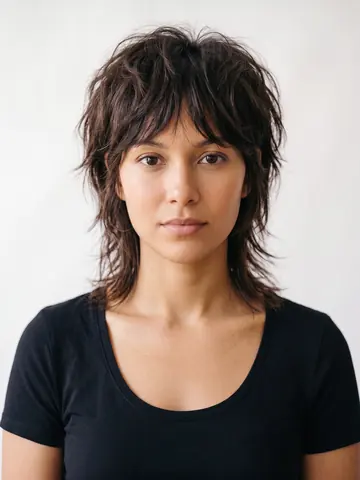 Wolf Cut Short
Every cut that suits a oval face, with the reasoning for each.
Round
Length and width are close to equal, the widest point is the cheek, and the jaw is soft with no hard corners. You are adding vertical, not horizontal. A long layered cut past the collarbone, an A line bob that ends below the jaw rather than at it, and side swept or curtain bangs all lengthen the line of the face. The classic mistake is a blunt chin length bob, which parks a straight horizontal line at the widest point.
Every cut that suits a round face, with the reasoning for each.
Square
The jaw is roughly as wide as the forehead and it turns a corner rather than curving, with face length close to face width. Curves and diagonals soften those corners: a wavy lob, layers that begin below the jawline, a deep side part, or a textured shag. Avoid a blunt one length cut that stops exactly at the jaw, because it traces the corner you are trying to soften.
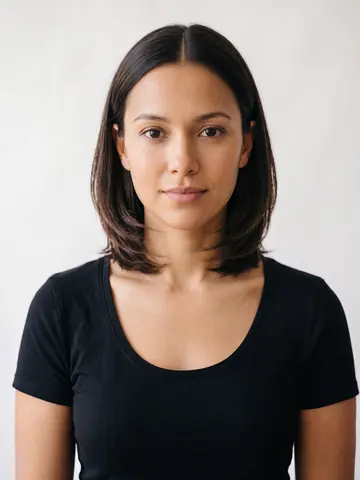 Layered Bob
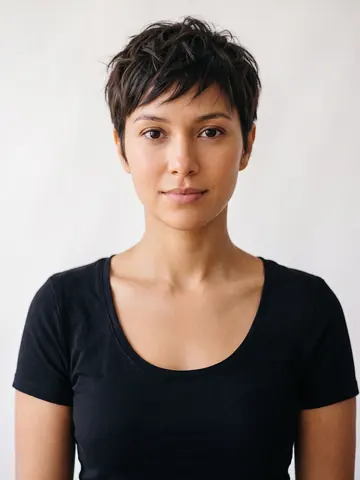 Textured Pixie
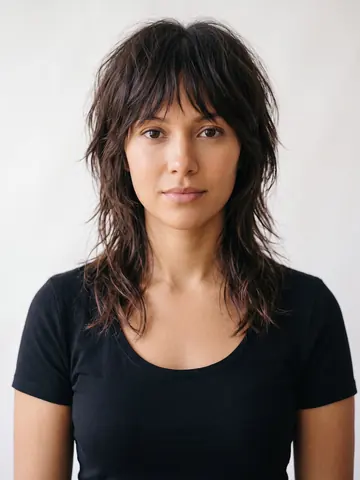 Wolf Cut Mid
Every cut that suits a square face, with the reasoning for each.
Heart
Forehead and cheekbones are wider than the chin, which comes to a point, often with a widow's peak at the hairline. The geometry asks for weight low and less bulk high. A chin length bob or a lob with the ends turned under builds width where the face narrows, and curtain bangs or a side swept fringe cut the visible forehead down. Tight volume piled at the crown does the opposite.
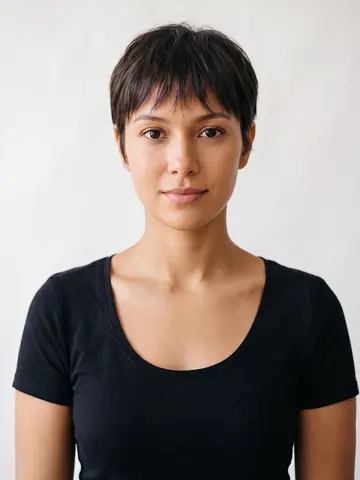 Pixie Bangs
Every cut that suits a heart face, with the reasoning for each.
Long or oblong
Clearly longer than it is wide, with forehead, cheeks and jaw at a similar width and no strong taper. Here you want horizontal, the opposite of the round face brief. Blunt bangs or a heavy fringe cut the vertical run in half. A shoulder or collarbone length cut with waves adds width at the sides. A long, poker straight center part with no layers is the one to skip, because it draws two more vertical lines.
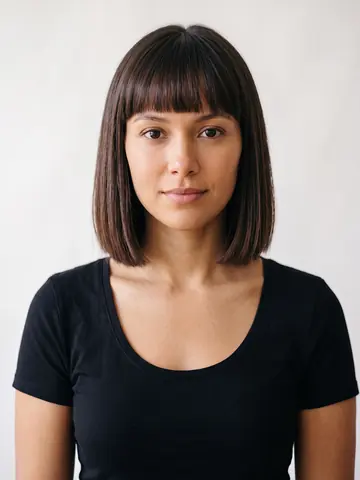 Blunt Bob Bangs
Every cut that suits a long face, with the reasoning for each.
Diamond
Cheekbones are the widest point, with a narrow forehead and a narrow chin. The job is to add width at the top and bottom so the cheekbones stop being the only thing with volume. A chin grazing bob puts fullness near the jaw. A side part with lift at the front, or a soft textured fringe, widens the forehead. Slicked back hair with all the volume at ear level exaggerates the cheekbones rather than balancing them.
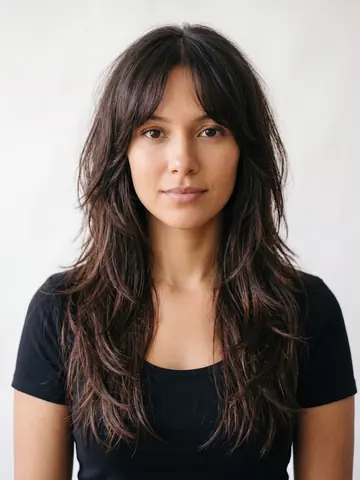 Shag Cut Long
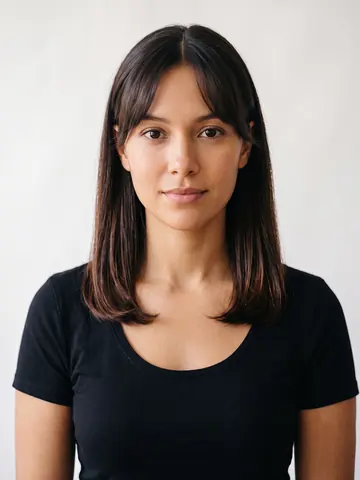 Curtain Bangs Mid
Every cut that suits a diamond face, with the reasoning for each.
Three things that matter more than the chart
Face shape rules are guidelines written to be printed on one page. They are not laws, and three other factors will change your result more.
1. Hair texture and density
The same cut is two different haircuts on fine straight hair and on thick curls. A shag needs enough density to hold the layers apart, or the ends go stringy. A blunt bob is heavy and flattering on fine hair and can turn into a triangle on thick, coarse hair unless the stylist removes weight underneath. Curls shrink, often by several inches when dry, so a curly cut has to be measured with the curl in, not pulled straight.
2. Your hairline and growth pattern
This is the factor that quietly ruins otherwise sensible haircuts. A cowlick at the front hairline will split a blunt fringe every time it dries, no matter how it was cut. A widow's peak changes where a center part naturally falls. A high or receding hairline changes how much forehead a fringe actually has to cover. A crown whorl decides which side your hair wants to fall on, which is why a side part can feel wrong on one side and effortless on the other.
3. How much styling you will actually do
Be honest about mornings. A blunt bob wants a blow dry with a round brush most washes to keep the line clean. A curly shag wants product and a diffuser. A sleek high ponytail look on textured hair is a standing appointment with a flat iron. Long layers are the low effort option because they still read as a haircut when they air dry. The cut that suits you is the one that still looks like a haircut on a Tuesday.
So is the face shape chart wrong?
No, it is just narrower than it pretends to be. The six shapes are a fast way to generate a shortlist of three or four cuts worth considering, and that is genuinely useful when the alternative is scrolling for an hour. What the chart cannot do is account for your specific hairline, your hair's weight, or how a cut sits against your particular jaw. That is the part you have to see rather than read.
Then look at the shortlist on your own face
A cut you like on someone else is a cut on their bone structure. The only test that settles it is the same cut on your photo. This is what that looks like on one face.
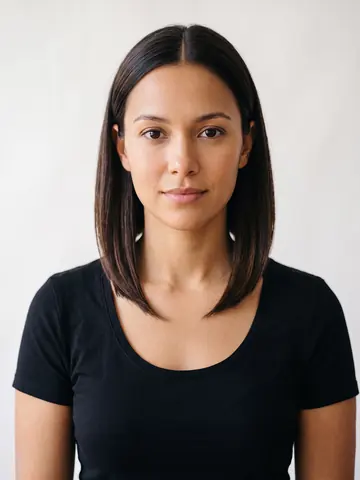
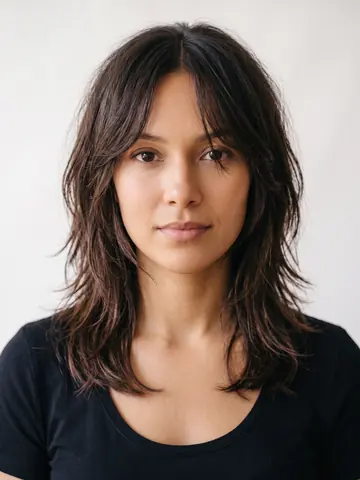
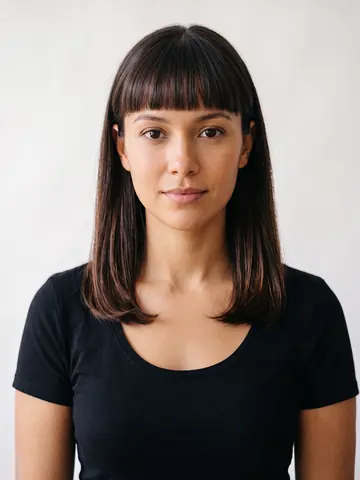
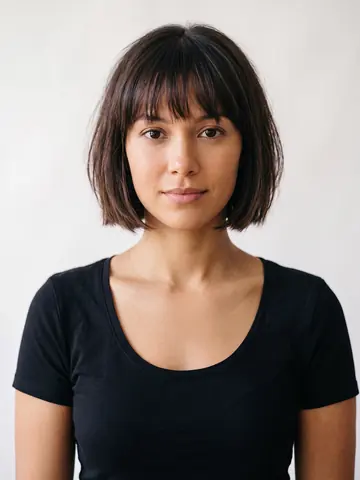
Same face, same light, four cuts that a face shape chart would sort into four different columns. Look at where each one ends against the jaw: that line is doing most of the work.
Upload one clear photo
Face the camera straight on in daylight with your hair pulled back off your forehead, so your hairline and jaw are both visible. Tap Upload Photo in the Hair Studio banner. There is no account to create, though a short setup runs the first time you open the app.
Run your shortlist
Search Discover for a cut by name, or use the Bob and Curly filter chips to narrow the grid. Cards are labeled cut and color together, like Long Straight with Espresso, so you can hold the color steady while you change the shape. If the shade is the part you are unsure about, the hair color try on page covers that on its own.
Compare, then decide
Save the two or three that work and look at them side by side in the Saved tab. The one that still looks right an hour later is usually the answer. Take it to your stylist as a reference photo of your own head.

Questions about face shape and haircuts
What face shape do I have?
What haircut suits my face shape?
Does face shape really matter?
What haircut makes your face look thinner?
What if I am between two face shapes?
Do bangs suit my face shape?
Do the same rules apply to men's haircuts?
How does HairGlam decide what suits me?
Is HairGlam free?
Keep reading on your shape
How to know your face shape
Four measurements, a mirror and a piece of tape, plus the faster way to skip all of it.
Haircuts for a round face
Where the length has to fall, which bob works, and why the chin length blunt cut fights you.
Haircuts for an oval face
The shape that suits most cuts, and how to choose when nothing is ruled out for you.
Hairstyle try on
How the render works, what makes a good photo, and what to expect from the result.
Face shape guides
Round face
Measure your face length and your cheekbone width. On a round face the two numbers are close, usually within about ten
Oval face
Face length is roughly one and a half times your cheekbone width. The forehead is marginally wider than the jaw, and t
Square face
Your three widths, forehead, cheekbones and jaw, come out within roughly a centimetre of each other, and the jawline t
Heart face
Your forehead measures wider than your cheekbones, and both are clearly wider than your jaw. The chin is narrow and sl
Diamond face
Cheekbone width is your largest measurement, clearly greater than both forehead and jaw, and the chin comes to a point
Oblong face
Face length is more than about one and a half times your cheekbone width, and forehead, cheekbones and jaw all measure
Stop guessing from a chart
Take the two or three cuts your face shape points to and see them on your own photo, before a stylist commits you to one of them.
Free to download. iPhone, iOS 15.1 or later.