Try on hair colors on your own photo before you commit
A cut you hate grows out. Color is the one you pay for again in six weeks, and sometimes pay twice to undo. Upload one selfie and see platinum, copper, burgundy or jet black on your hair, against your skin, before anyone opens a tube.
Free to download. iPhone, iOS 15.1 or later. ★★★★★ 5.0 from 2 ratings on the App Store.
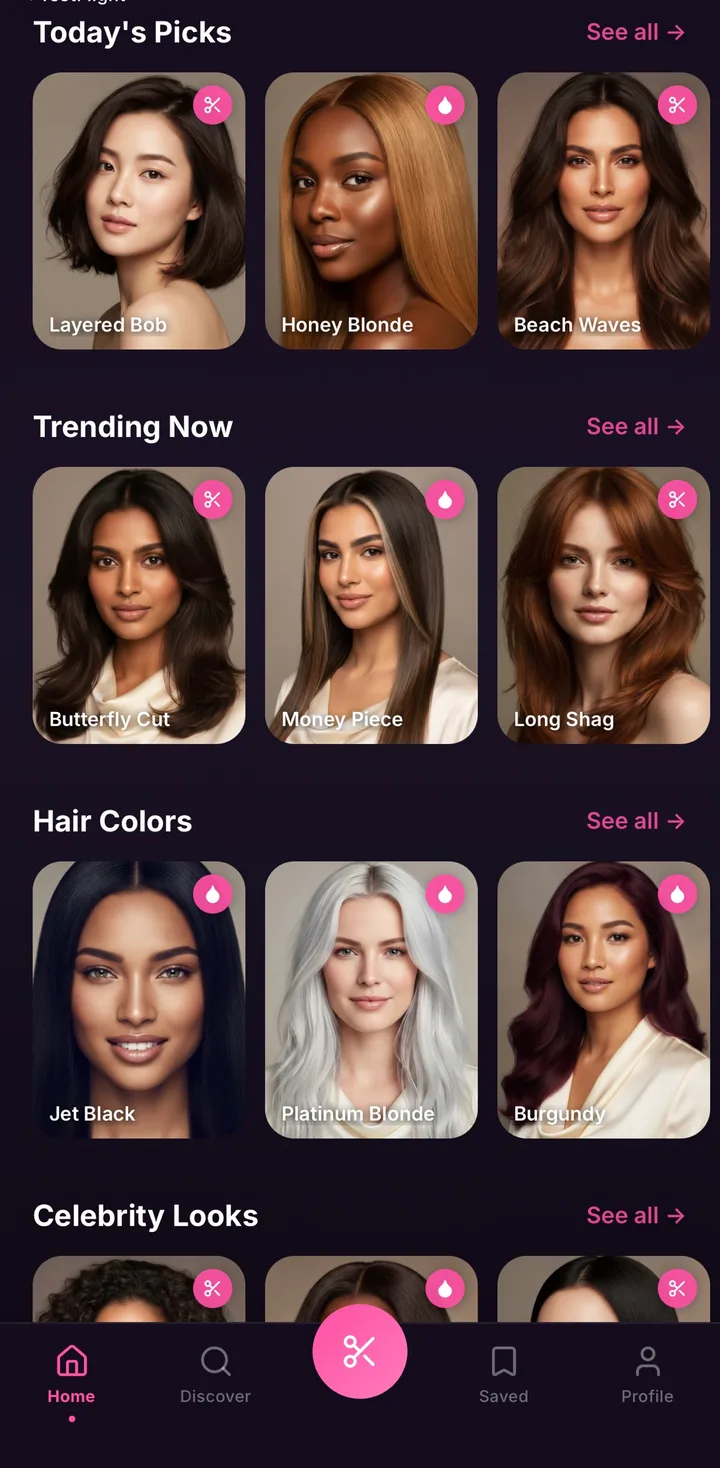
Every shade in the app, by family
125 hair colors in 15 families. Each one has its own page here showing the shade rendered on a model, what it starts from and what it costs to keep, and each one renders onto your own photo in the app.
Blacks
3 shades in the appThree solid blacks: a neutral jet, a near-black raven, and a blue black with a cool cast in it. Black deposits pigment rather than removing any, so it is the one part of this page that needs no bleach and can usually be done in a single appointment at any starting level. It sits most easily on cool and neutral undertones; a flat blue black next to very fair, warm skin is the highest contrast combination in the catalog and it reads severe on some people and striking on others, which is exactly the sort of thing worth rendering before you commit. Upkeep at the root is genuinely low, because black regrowth on dark natural hair barely shows. The cost is on the way out: lifting black back to brown is a multi session job, so treat it as the easiest color to get into and the hardest to leave.
Brunettes
5 shades in the appThe workhorse family, running from a near-black espresso up to a honey brown that is almost dark blonde, and covering both temperatures: chestnut and honey brown are warm, ash brown and espresso are cool. If your natural base is within a couple of levels of the shade you want, this is one appointment and often a box at home, because you are depositing rather than lifting. Warm undertones usually look healthiest in chestnut and honey; cool undertones in ash brown and espresso, where the gold has been taken out. Upkeep is the mildest on the page. Brown regrowth against brown hair is forgiving, so what you are actually maintaining is fade rather than a root line, and a color depositing conditioner handles most of that between appointments.
Coppers
3 shades in the appOrange based reds, from a deep dark copper through to a bright ginger. On dark hair copper needs some lift underneath it before it glows rather than just reading as warm brown, which is the part people are surprised by. Warm and neutral undertones carry copper easily. Very cool, pink toned skin can end up looking flushed beside it, so this is a family where the render earns its keep. Then there is the fade. Red pigment molecules are large, they sit near the surface of the hair rather than deep inside it, and they leave in the shower. Copper is the fastest fading family here, so budget for a color depositing mask at home rather than a salon visit every six weeks.
Reds
3 shades in the appThe blue based side of red: auburn, burgundy and an electric cherry that is closer to wine than to rust. Cool undertones tend to carry all three well, and burgundy in particular flatters deeper skin that a golden shade would fight. On dark hair burgundy often only shows in direct sunlight, which is the single most common disappointment in this family and the reason it is worth seeing on screen first, where you can hold it next to your own coloring. Fade behaves the same way it does with copper, so expect the tone to soften within weeks and plan on topping it up rather than waiting for a full color appointment.
Blondes
6 shades in the appSix shades that cover an enormous range of effort. Dark blonde and honey blonde are within reach of most light brown hair in one sitting. Platinum is the biggest commitment in the app: dark hair has to travel up through orange and yellow before it can be toned pale, and a responsible colorist will split that across sessions weeks apart rather than force it in one. Warm skin usually sits best with honey, golden and strawberry blonde; cool skin with ash and platinum, where a toner has cancelled the yellow that bleach leaves behind. Toner is the line item everybody forgets. It washes out, so the icy shade you left with will drift warm within a few weeks, and the real commitment is a toning appointment every few weeks plus purple shampoo at home in between.
Silver & Gray
2 shades in the appTwo ways of arriving at the same place: letting gray grow in and wearing it deliberately, or bleaching to near white and toning gray on purpose. As a dye job this is platinum plus a gray toner, so it carries every one of platinum's costs and then adds one, because gray and silver toners fade faster than warm ones do. It is also the family where trying before buying matters most. Silver hair bounces light back onto your skin, and that either brightens a cool complexion or drains a warm one, with very little middle ground. If you are weighing up whether to stop covering your grays, this is the cheapest way to look at the answer for a while before you decide.
Vivids
11 shades in the appEleven direct dyes, from orange and hot magenta through to indigo and plum. These sit on the outside of the hair rather than inside it, which has two consequences: almost all of them need a pale base underneath to read as the color on the label, so on dark hair a vivid is a bleach job with a color on top; and they wash out steadily rather than growing out. The pastels, cotton candy and icy blue and silver purple, need the palest base and fade the fastest, sometimes noticeably within a handful of washes. Blues and greens hold longest. Undertone rules do not really apply here, so choose by contrast against your skin instead, and look hard at the render, because a green that looks superb on a phone screen can behave very differently beside your own complexion.
Highlights
8 shades in the appPartial lightening in two shades, blonde and caramel, across four placements: all over, face framing, chunky, and money piece. This is the low risk way to find out whether a lighter shade suits you at all, because it is less chair time than a full head and it grows out without a hard line. A money piece is the smallest version of the idea, two brighter sections at the front of your face. Placement does more visible work than the shade does: light advances and dark recedes, so bright pieces at the front pull the eye up and inward, while chunky horizontal bands cut the hair into sections across. If you have wanted to go lighter and been talked out of it by the maintenance, start here.
Ombré & Balayage
8 shades in the appGradients rather than solid color: dark at the root melting into light through the mid lengths and ends, which is the family balayage belongs to. Because the root stays your own depth, there is no line of regrowth to chase, and that is the whole reason upkeep here is quoted in months instead of weeks. You go back when you want to, not when the mirror tells you to. Reverse ombré inverts it, light root into dark ends, and does show regrowth, so it is the higher maintenance option of the two. Fire ombré, sunset, coral reef and swamp are painted gradients in colors nothing grows out of, so read them alongside the vivids for cost.
Multi-Tone
7 shades in the appSeveral colors blended through one head, which in practice means a full pre lighten plus multiple placements. This is the most chair time on the page and the hardest look to keep deliberate, because the tones do not fade at the same rate, so what leaves the salon balanced comes apart unevenly. Oil slick and galaxy sit on a dark base and are the most forgiving of the seven for exactly that reason. Unicorn and the other pastel blends are the least. Nobody should book this off a mood board photograph of someone else's hair, which is a reasonable argument for looking at it on a face first.
Dip Dye
17 shades in the appSeventeen shades applied to the ends only, from black and platinum through to indigo. Dip dye is the cheapest way to wear a bold color, and not because of the price: the part of your hair that takes the damage is the part you can cut off whenever you have had enough. Regrowth is not a problem here either, since the line between your color and the dyed section is meant to be visible. What you are signing up for is fade in the vivid versions, and ends that are more porous than the rest of your hair while they last, so they tangle more and need more conditioner than the length above them.
Shadow Roots
4 shades in the appA deliberately darker root melted down into a lighter length. It exists for one practical reason, and it is the best reason on this page: the regrowth line is part of the design, so the gap between appointments stretches from six weeks out to three or four months. If the thing that has kept you away from blonde is root maintenance rather than the shade itself, this family is the direct answer to that. The trade is that the look has to be shaded properly at the join, so it is a slightly more skilled application than a flat color, and a home kit rarely gets the blend right.
Peekaboo
17 shades in the appHidden panels of color underneath the top layer, in seventeen shades. Worn down it reads as your ordinary hair; tied up, or simply moving, the color shows. This is the lowest commitment way to wear a vivid and the usual choice when a workplace or a school has opinions about hair color. Be clear about one thing though: the panel still has to be lightened, so the chemical damage is real. It is just confined to a section you can hide while it recovers, and cut out later without changing your outline. For a first experiment with color, this and dip dye are the two safest doors in.
Split Dye
8 shades in the appTwo colors, one down each side of a center part, from the black and white Cruella through to pink and blue. High effort in the chair, and higher effort afterward than people expect, because the whole look only reads as intentional while the part sits exactly in the middle. Move it half an inch and the symmetry goes. Both halves usually need lightening first, which means the damage is a full head of bleach even though only half of it ends up pale. It is a commitment worth previewing rather than deciding on in a chair.
Tinsel & Extensions
3 shades in the appNot dye at all. Strands and feathers tied or clipped into the hair, which means no lift, no chemistry, no fade schedule, and you can take the whole thing out the same afternoon. It is the only family on this page with no cost in condition. If you like the idea of a vivid and cannot justify what bleach would do to your ends, this is the honest alternative, and it is also the easiest way to test whether you actually enjoy having color in your hair before you pay someone to make it permanent.
Before and after, on the same face
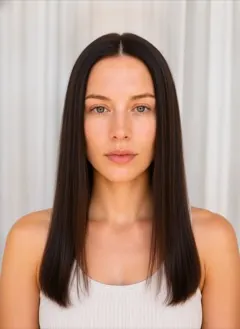
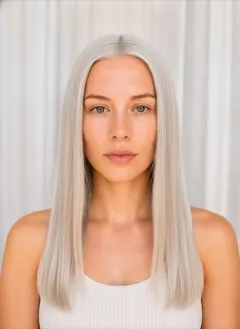
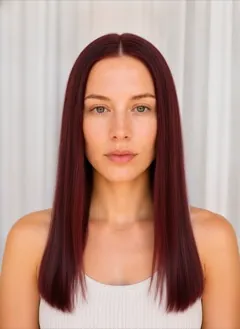
The same photo with one thing changed. This is what the app puts out, so you can judge the quality of the render before you download anything.
 Espresso
 Platinum BlondeEspresso
 Burgundy
 Espresso
 Ash Blonde
Every image in this section is HairGlam output on the same two models, one female and one male. They are not customer photos and they are not salon photographs, and both sides of each pair are generated, so there is no untouched original here. Espresso is used as the starting point because it is the closest shade in the catalog to the models' own depth. In the app the shade lands on the photo you upload instead.
The Hair Colors row, straight from the app
Colors live in their own row, separate from the cuts, so a shade test does not have to become a haircut decision.
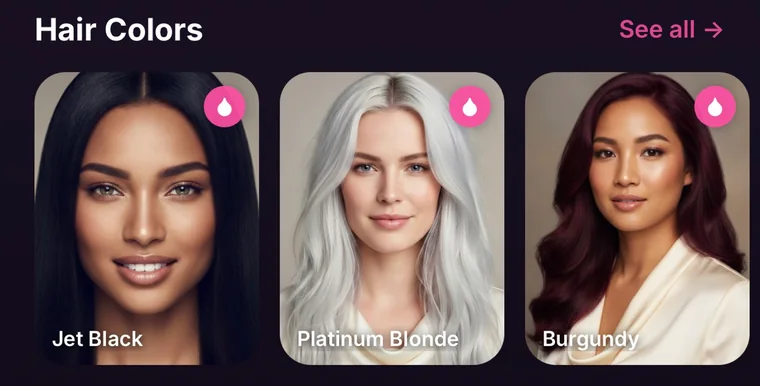
Jet Black, Platinum Blonde and Burgundy sit next to each other in the Hair Colors row. Tap one and it renders on the photo you uploaded, with your face and your lighting kept intact.
The shade is on your hair, not a model's
A swatch on a box, or a color chart taped to a salon wall, tells you what the dye looks like on someone else's base. What decides whether ash blonde works is your skin, your eyes and the level your hair starts at. HairGlam regenerates your own photo with the new color, which is the only version of the question that matters.
Change the color, keep the cut
Most people arrive at a color decision already attached to their length. You can leave the cut alone and cycle through shades, family by family, or head over to the hairstyle try on and test both at once. In Discover the grid labels every card as a cut and a color together, like Long Straight and Espresso, or Beach Waves and Caramel Highlights.
What hair color suits me? Start with undertone
Undertone is the quiet color underneath your skin. It does not change with a tan, and it is the reason two people can dye their hair the same shade and get opposite results.
Warm, cool and neutral, in plain terms
Warm undertones lean gold, peach or yellow. Cool undertones lean pink, red or blue. Neutral sits between the two, with no strong pull either way. This is separate from how light or dark your skin is: deep skin can be cool, fair skin can be warm, and the tests below work the same on both. Three checks in daylight will usually give you a clear answer.
The vein test
Turn your wrist over near a window and look at the veins. Green reads warm. Blue or purple reads cool. If you keep changing your mind because they look like both, that is neutral, and it is a real answer rather than a failure to see properly.
The jewelry test
Hold a silver piece against your face, then a gold one, with no makeup and no colored top. One of them will make your skin look brighter and more even. The other tends to make you look slightly tired or yellow. Silver flatters cool, gold flatters warm, and if both look fine you are near neutral.
The pure white test
Put on a pure optic white top, then a cream or ivory one. Cool undertones look crisp in pure white and slightly dull in cream. Warm undertones look drained and gray in pure white and healthy in cream. This one is the tiebreaker when the first two disagree.
When the tests disagree
Neutral is common, and it is the easiest position to be in: you can wear both warm and cool shades as long as the depth is right. If you are neutral, stop worrying about temperature and pick by contrast instead. High contrast between hair and skin is bold and draws attention up. Low contrast is softer and lets your features lead.
Shades that tend to suit warm undertones
Golden and honey blonde, caramel, copper, warm auburn, chestnut and chocolate brown. Warm skin has gold in it already, so a warm shade harmonizes instead of competing. If you want to go dark, a soft black with a warm base usually reads friendlier on warm skin than a flat blue black.
Shades that tend to suit cool undertones
Ash and beige blonde, platinum, mushroom and cool espresso brown, jet black, and the red family that runs blue rather than orange: burgundy, cherry, plum. Cool skin next to a strongly golden shade can look flushed, which is why a lot of people describe warm blonde as making them look red in the face.
Your starting level matters as much as the shade
Level is how light or dark your natural hair is, and it decides how much work a color takes. Going darker is one appointment. Going more than two or three levels lighter means lift, and lift means bleach. The picture in your head might be a single shade, but your hair may need several stages to get there.
Where undertone theory comes from
Undertone is not a hair invention. It comes from color analysis, the same system that decides which clothes and lipsticks make you look well. Our sister app Tone & Fit does the full version of that analysis from a photo, if the topic turns out to be more interesting to you than just hair.
What going lighter actually costs you
Not in money, which varies far too much by city and salon to quote. In condition, in appointments, and in the six weeks after.
Bleach subtracts, it does not add
Lightener opens the cuticle and strips out the pigment that is already there. Nothing puts that pigment back, so the only way out of a lift you regret is toning over it, growing it out, or cutting it off. The darker and more stubborn your natural base, the more lift you need, and responsible colorists will split that across sessions weeks apart rather than doing it in one sitting.
Toner is the part everyone forgets to budget for
Bleach leaves warm yellow and orange underneath. Toner sits on top to neutralize it, and toner washes out. That icy ash you left the salon with will start drifting warm within a few weeks, so the real commitment is a toning appointment every few weeks plus purple shampoo at home between them. Almost nobody factors this in before the first appointment.
Roots move about half an inch a month
Which means a solid all over color shows a visible line at the scalp somewhere around the four to eight week mark, and keeps showing it forever. This is the single strongest argument for balayage or a money piece over a full head lift: they are designed to have no hard regrowth line, so you choose when to go back rather than being told by the mirror.
Condition is the real bill
Lifted hair is more porous. It tangles more, absorbs water faster, dries rougher and breaks more easily at the ends, especially if you also heat style. If your hair is already fragile from a previous color, a colorist may reasonably tell you no, or tell you it will take three appointments. Hearing that at a consultation is much better than hearing it halfway through.
Correction costs more than the original
Prices swing enormously between markets, so treat any number you read online with suspicion. What holds everywhere is the shape of it: a full head of bleach and toner sits near the top of any salon menu, and fixing a color you dislike is a longer, more skilled job than the one that caused it. Ask for a strand test and a written quote before you book anything you are unsure about.
Three steps to see the shade on yourself
The whole point is to get to a yes or no before the consultation, not after it.
Upload one photo in daylight
Face a window, no filter, hair back off your forehead. Lighting matters more for color than it does for cuts, because you are judging the shade against your skin. A warm indoor bulb will nudge every result toward gold.
Open the Hair Colors row
Jet Black, Platinum Blonde and Burgundy sit at the front of it. If you want something more specific, search Discover for the name and use the Bold Color filter, or scroll Trending Now for money piece.
Compare, save, then book
Run two or three shades on the same photo and compare them properly instead of one at a time. Save the ones that work and take them to your colorist as a reference for the finish you want.
Hair color questions, answered
Can I try on hair colors with my own photo?
How many hair colors are in the app?
What hair color suits me?
How do I know if I have warm or cool undertones?
What is the difference between a money piece, balayage and an ombré?
Which hair colors do the least damage?
Will platinum blonde work on my dark hair?
Can I change the color without changing the cut?
Are the photos on this page real people?
Is HairGlam free?
What kind of photo gives the best color result?
Can I show the result to my colorist?
Still deciding on the cut too
AI hairstyle try on
The short version of what HairGlam does, and every look in the app on one page.
Virtual hairstyle try on
How the try on works, what a good photo looks like, and what to expect from a render.
What haircut suits me?
Find your face shape first, then see which cuts flatter it instead of guessing from a chart.
The full catalog
All 125 shades and every cut in the app, each with its own page and its own render.
See the color before you sit in the chair
Platinum, copper, burgundy, jet black and every shade in between, on your own photo, in the time it takes to read the salon menu.

Free to download. iPhone, iOS 15.1 or later.