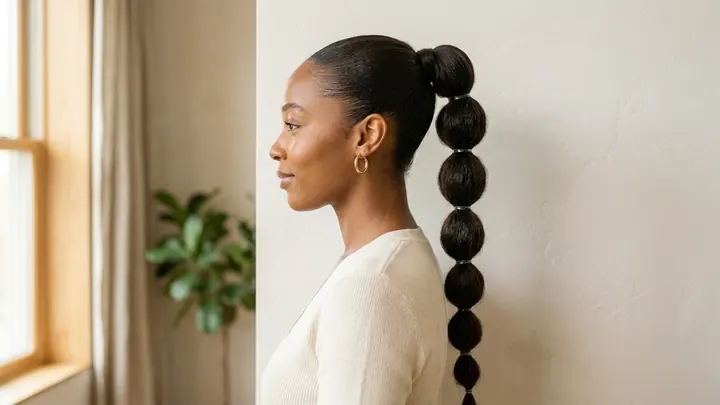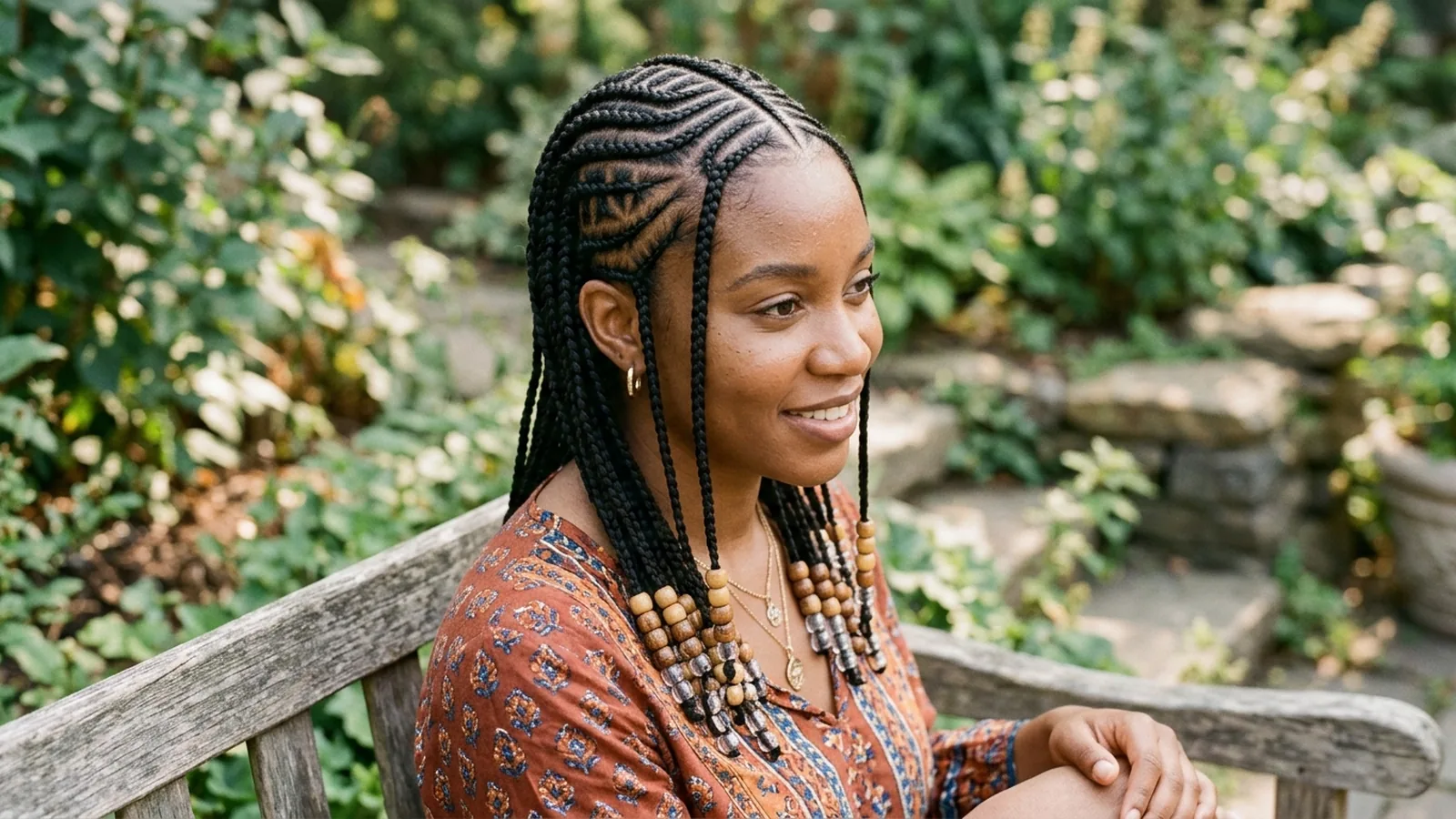
One or two braids run straight down the center of your head. On either side, braids sweep back from the temple toward your face instead of straight back. Beads often finish the ends. That mix of directions is what makes fulani braids instantly recognizable, and it is what sets them apart from a full head of uniform cornrows.

See any cut or color on your own photo. Free to download, iPhone and iPad, iOS 15.1 or later.
Try the look: Fulani Braids on your own photo
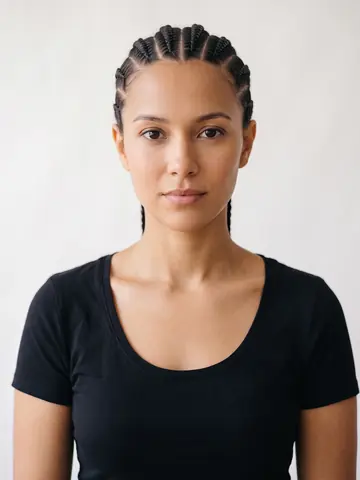 Cornrows
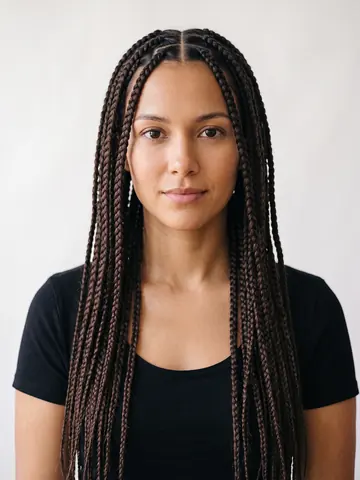 Box Braids
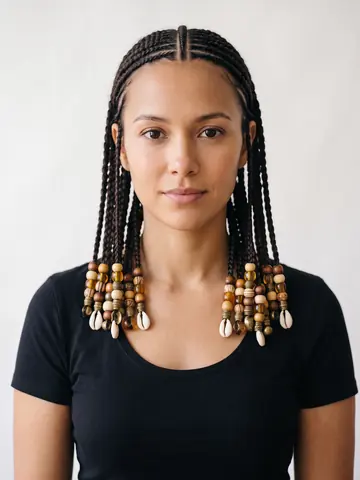 Fulani Braids
The style traces back to the Fulani people of West Africa, one of the largest ethnic groups across the Sahel, worn and adapted for generations before it reached mainstream hairstyling. Here is the pattern itself, the beads, and what to expect for upkeep.
The pattern: center cornrow and side braids
The defining feature is the mix of directions. A single cornrow, sometimes two, runs from the front hairline straight back along the center part. On either side, braids are cornrowed close to the scalp near the temple, then released into longer, looser braids that sweep toward the face. The result reads as more decorative than a full head of uniform cornrows, since your eye follows a few different lines instead of one repeating pattern.
Braiders vary the count and thickness of the side braids to suit hair density and the look you want, so no two sets ever look identical, even with the same basic layout.
Beads and other finishing touches
Beads threaded onto the ends are a signature part of the traditional look, adding both movement and sound as the braids swing. They are not required. Metal cuffs, colored thread wraps, or bare ends all work with the same pattern if beads are not your thing.
Length and hair needed
Fulani braids work on short hair as well as long, since braiding hair builds both the center cornrow and the side braids to whatever length you want. Ask your braider for box braids style extensions for a fuller finish, or a thinner braiding hair for something more delicate.
How long fulani braids typically last
Most people wear fulani braids for 4 to 8 weeks before taking them down and giving the scalp a break. How long yours last depends on how fast new growth shows at the center part and edges, and how much tension the style put on your hairline going in.
Other protective styles to consider
Our full protective hairstyles guide compares these and more side by side, including install time.
See it on your own face before you commit
A style with this much detail is worth previewing before you sit in a chair for several hours. HairGlam lets you take a photo, or choose one from your library, then apply a hairstyle to it so you can see how a braided look reads on your own face and hairline first. It is free to download for iPhone and iPad, with a small free allowance of hairstyle try-ons before HairGlam Pro is needed for unlimited use.
See a braided style on your own photo in HairGlam

Try fulani braids on your own photo
- Add one selfie. Front on, even light, hair off your face. No account.
- Tap fulani braids in Hair Studio, or any of the other 298 looks.
- See it in seconds on your own face, then save it for your stylist.
Free hairstyle, hair color and makeup looks to start. No account needed.
Sources
- Hairstyles that pull can lead to hair loss, American Academy of Dermatology
- Black hair: Tips for everyday care, American Academy of Dermatology