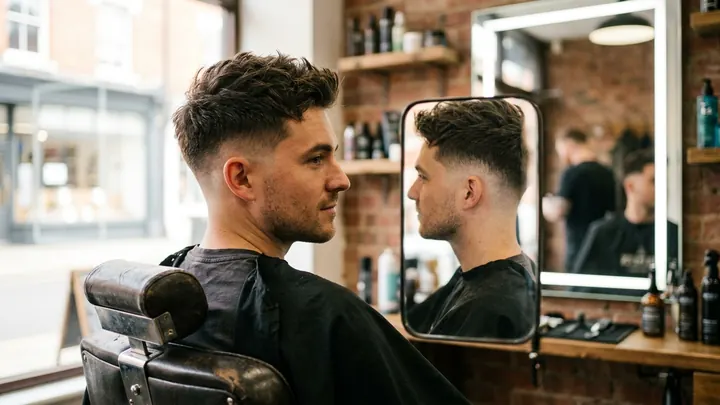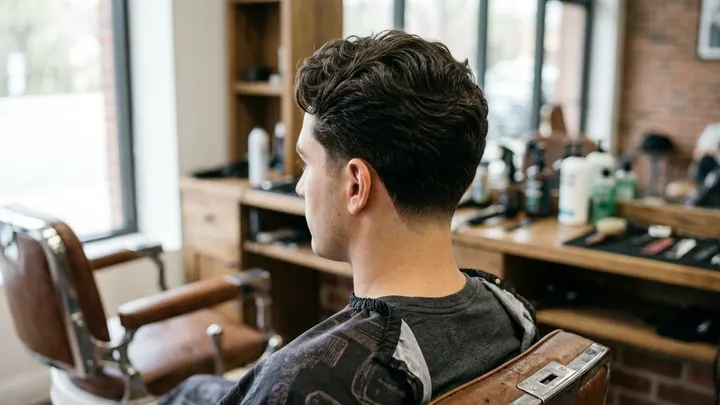
Short at the front and sides, long at the back: the modern mullet keeps that basic structure but softens nearly everything about how it is executed. The 1980s version leaned into a sharp, almost blunt line between short and long. The modern version blends the transition and relies on texture instead of a hard visual break.

See any cut or color on your own photo. Free to download, iPhone and iPad, iOS 15.1 or later.
Try the look: Mullet on your own photo
 Mullet
 Short Wolf Cut
 Pompadour
What actually changed about the modern mullet
The biggest shift is in the transition itself. Instead of a distinct short section abruptly meeting a long section, a modern mullet uses a fade or taper on the sides and back, and heavy texturizing throughout, so the eye reads movement and layers rather than two lengths stitched together. The front and top also carry more length and styling versatility than the classic version, often blending into the longer back instead of standing apart from it.
Why texture matters more now
A lot of the softening comes from how the hair is cut, not just where. Point cutting and heavy layering through the back break up what would otherwise be one solid block of length, giving it movement instead of a flat, single-length curtain. This is part of why the modern mullet suits a wider range of hair types than the original: on wavy or curly hair, the natural texture does even more of the softening work, since curls and waves already interrupt a hard line on their own.
The wolf cut connection
The wolf cut is close enough to a modern mullet that the two get confused constantly. A wolf cut is generally described as a shag and mullet hybrid, with a shorter, more heavily textured crown and top blending into a longer back, and layering worked through the entire length rather than concentrated mainly at the back. A modern mullet keeps a bit more of the classic short-to-long structure intact, while a wolf cut leans further into shag-style layering throughout. The line between the two is genuinely blurry, and plenty of barbers use the terms interchangeably.
Who a modern mullet suits
Because the modern version blends rather than contrasts sharply, it is more forgiving across face shapes and hair types than the original mullet was. Waves and curls soften it naturally. Straight hair still works well, especially with a fade on the sides to help the transition read as intentional rather than choppy.
It also pairs easily with other current men's cuts, since the same short-sides, longer-on-top logic shows up across our guide to men's haircut types: an undercut structure on the sides with mullet length at the back, or a blunt panel left on top with a mullet-length back, are both common modern combinations.
Seeing it before you commit
A modern mullet's whole appeal rests on how well the transition blends on your specific hair, which is hard to judge from a photo of someone else's cut. Apply a mullet or a wolf cut to your own photo in HairGlam and see how the shape and blend actually look on your face before you sit down at the barber.
See it on your own face in HairGlam
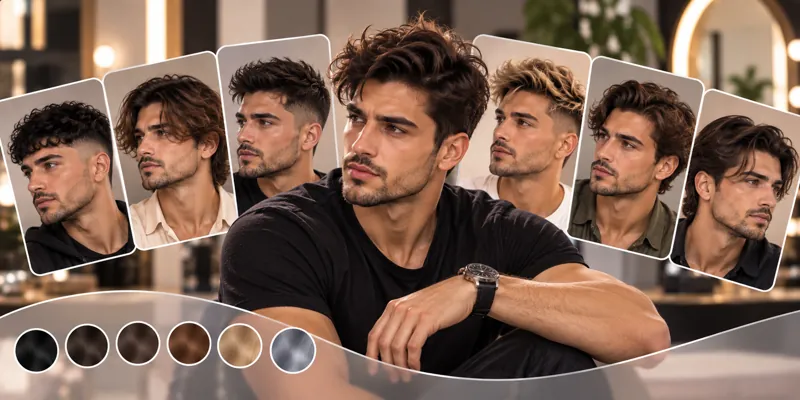
Try modern mullet on your own photo
- Add one selfie. Front on, even light, hair off your face. No account.
- Tap modern mullet in Hair Studio, or any of the other 298 looks.
- See it in seconds on your own face, then save it for your stylist.
Free hairstyle, hair color and makeup looks to start. No account needed.