
Stretch a clean strand of wet hair between two fingers. If it snaps into a sharp, angular Z, you have 4b hair. If it barely bends at all, you have 4c. That single test settles most of the confusion, because on the head, fresh out of the shower, 4b and 4c hair can look almost identical.

See any cut or color on your own photo. Free to download, iPhone and iPad, iOS 15.1 or later.
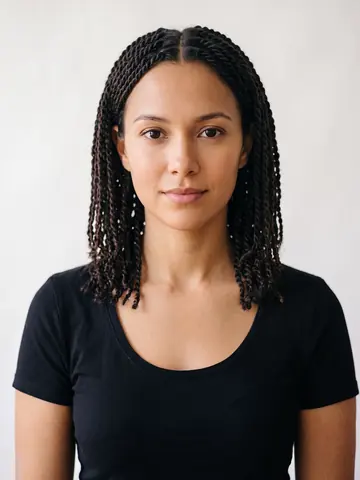 Mini Twists
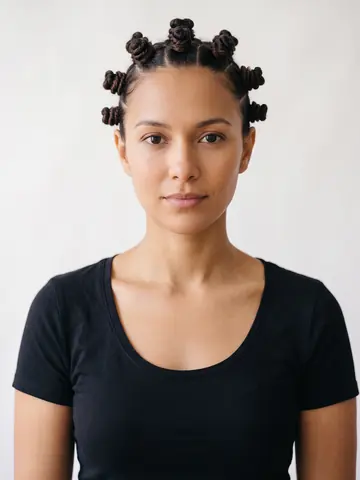 Bantu Knots
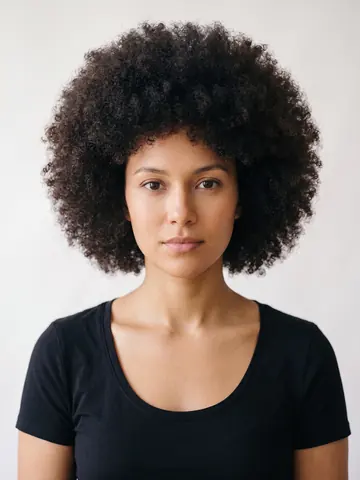 Afro
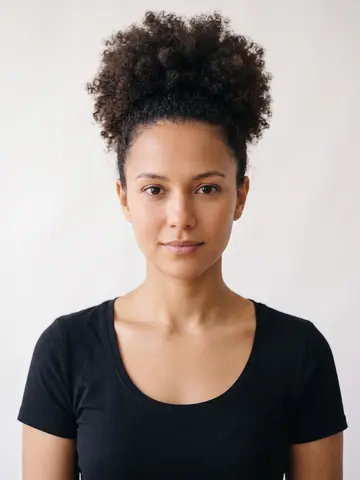 High Puff
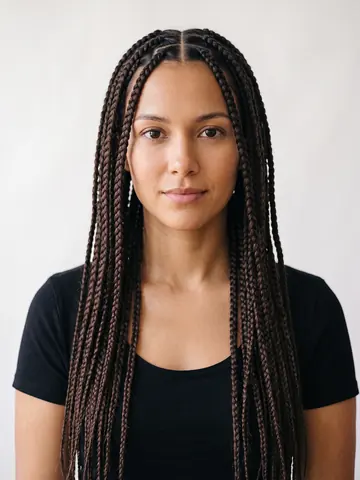 Box Braids
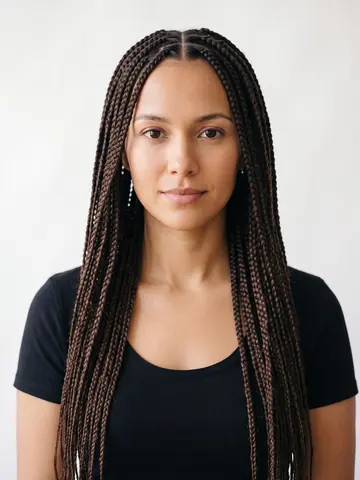 Knotless Braids
The real difference lives in the coil itself, not the shrinkage. 4b bends in tight zigzags. 4c has close to no visible curl pattern, even stretched, and pulls up the most of any type. Here is how to spot which one you have, what each needs day to day, and the styles built for that texture.
What 4b hair looks like
4b hair has a clear, angular bend that reads more like a Z than a rounded curl. It sits between 3c and 4c on the chart: less defined than a curl, more visible shape than 4c. Strand thickness ranges from fine to coarse, and the zigzag shows up most clearly right after you stretch or detangle the hair, since shrinkage hides it the rest of the time.
Plenty of people sit right on the border, 4b blending into 3c or into 4c. That is normal. Hair type is a spectrum, not a label you have to pick once and defend.
What 4c hair looks like
4c hair has little to no defined curl pattern, even when you pull a strand fully straight. It sits at the tightest end of the coil spectrum and shrinks the most of any hair type, sometimes pulling up to a fraction of its stretched length. The coil bends at more points along each strand, which makes it tangle and break more easily if you skip moisture or detangle it rough.
Because the pattern is so subtle, 4c is the type people underestimate most in photos. Two people with the same stretched length can look like they have completely different amounts of hair once it shrinks back up. Length comparisons across coily textures rarely tell the whole story.
When your hair has both patterns
Most heads are not one uniform type all over. You will often find a tighter, less defined pattern at the nape and hairline, with a more open Z through the crown and top. Treat your densest, tightest sections with a 4c moisture routine, and let the rest follow whichever pattern it actually holds. You do not need one label for your whole head.
4b vs 4c hair at a glance
| Trait | 4b hair | 4c hair |
|---|---|---|
| Pattern | Visible Z shape, angular bends | Little to no visible pattern |
| Shrinkage | Noticeable, often shorter than stretched length | Often the most dramatic, can look half its stretched length |
| Strand feel | Coily, some spring when stretched | Very coily, less spring, tangles easily |
| Moisture needs | High | Very high |
Shrinkage and length checks
Shrinkage makes both types easy to misjudge in a mirror or a photo. For an honest read on your real length, stretch a small section of clean, detangled hair between two fingers instead of measuring it coiled up. Do this on a few sections around your head, not just the front. Curl pattern and shrinkage shift from crown to nape more than most people expect.
Moisture and product routine
Both textures do best on a layered moisture routine rather than one all-in-one product. A common order is liquid, then cream, then oil: a leave-in conditioner first, then a cream or butter, then a light oil to seal it in. 4c hair usually needs this routine more often and in heavier amounts, since its tighter coil makes it harder for scalp oil to travel down the strand on its own.
Detangling and wash day differences
Detangle both types with fingers or a wide tooth comb on soaking wet hair, conditioner still in, working from the ends up toward the roots. 4c hair needs this done in smaller sections, since the tighter coil catches on itself and a large section risks more breakage.
Build in extra wash day time for 4c hair and you will keep more of it in the long run.
Styles that suit 4b hair
The visible pattern in 4b hair holds up well in styles that let curl definition show. A twist out or a set of bantu knots worn loose usually unravels into a clean, defined pattern. A worn out afro also holds its rounded shape a little longer on 4b than on a tighter coil, since the pattern itself gives it structure to spring back into. A high, rounded puff is a simple option that lets the pattern show right at the crown.
Styles that suit 4c hair
Because 4c hair is the most fragile of the coily types, styles that cut down on daily manipulation protect length best. Box braids or knotless braids that stay in for a few weeks reduce the combing and detangling that causes most breakage. Mini twists work the same way while still leaving room to wear the hair loose between installs.
For the full range of protective options and how long to leave each one in, see our protective hairstyles guide.
See it on your own face before you commit
HairGlam is our own app, made by Viral Labs, and it works the same way no matter your hair type: take a photo, or choose one from your library, then apply a hairstyle to it so you can see the shape before you commit to it in the chair. It is free to download for iPhone and iPad, with a small free allowance of hairstyle try-ons before HairGlam Pro is needed for unlimited use.
See a twist out or braided style on your own photo in HairGlam
More hair types to compare
For the fuller picture across every texture, our hair type chart lays out the full range from straight to coily side by side. Seeing the whole spectrum together makes it easier to place your own texture with confidence.

See it on your own face in three taps
- Add one selfie. Front on, even light, hair off your face. No account.
- Pick a cut, a color or a makeup look from 299 in the catalog.
- See it in seconds on your own face, then save it for your stylist.
Free hairstyle, hair color and makeup looks to start. No account needed.
Sources
- Black hair: Tips for everyday care, American Academy of Dermatology
- Hairstyles that pull can lead to hair loss, American Academy of Dermatology