
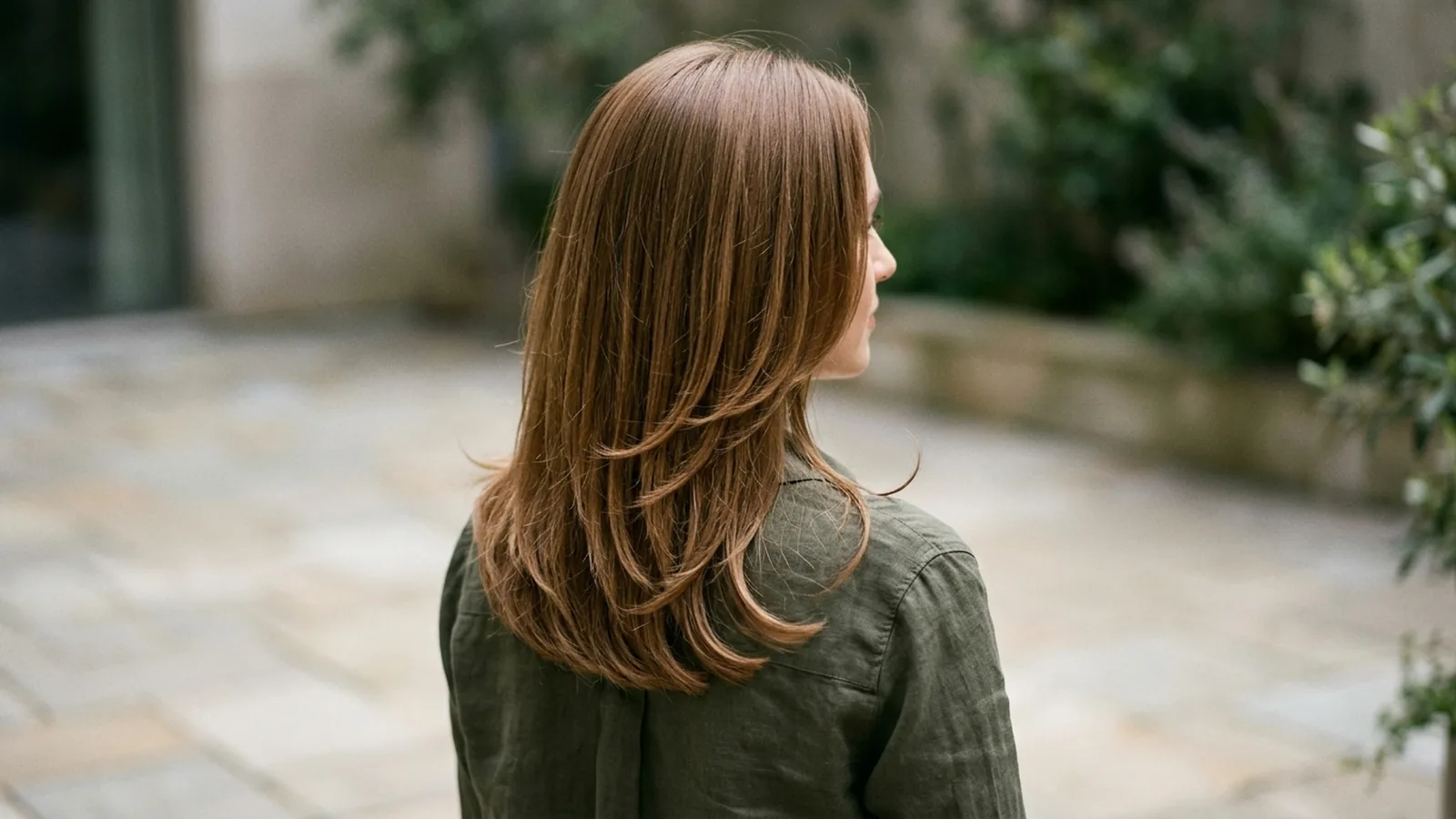
If your stylist has ever asked "how many layers do you want," you already know the question is not simple. There are at least 14 distinct types of layered haircuts, and they do different jobs. Some add movement, some remove bulk, some frame your face, and some barely show until your hair moves.
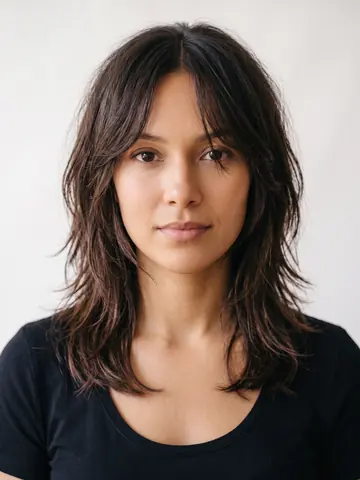 Shag Cut Mid
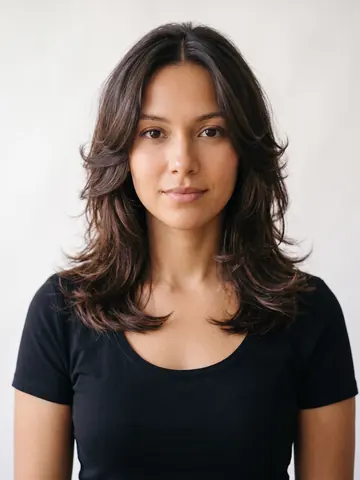 Butterfly Cut Mid
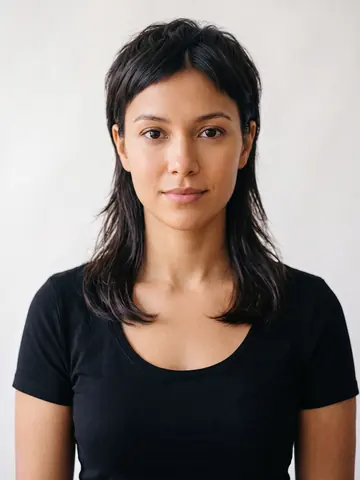 Mullet
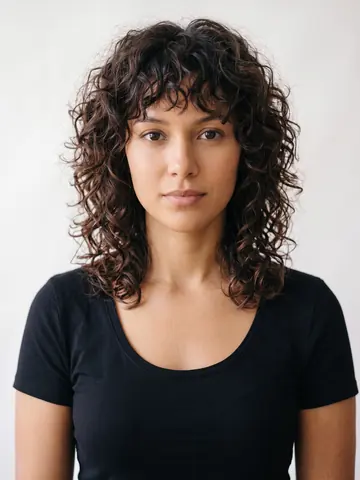 Curly Wolf Cut
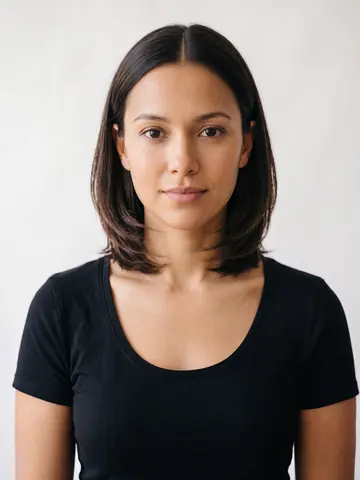 Layered Bob
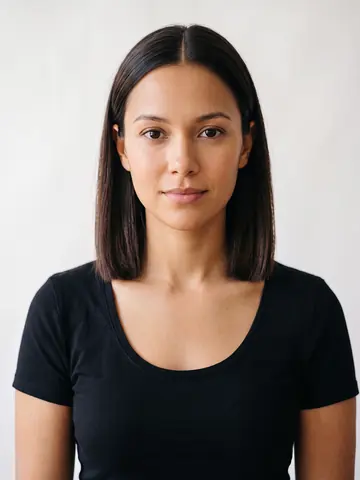 Blunt Bob
Here is each type in plain terms: what it is, who tends to like it, and how to describe it so you and your stylist land on the same result. Where a type has its own named style in our catalog, preview it on your own photo before you decide.
How types of layered haircuts are grouped
"Layers" is not one thing. Stylists think about three separate questions:
- Length: how short is the shortest layer compared to your longest length?
- Placement: are the layers on top, underneath, or framing your face?
- Overall shape: is the layering subtle background texture, or is it the whole point of the cut, like a shag?
The 14 types below are grouped by those three questions. Pick one from each group if you want to be specific with your stylist.
Layered haircuts by length
| Type | Where the shortest layer starts | Upkeep |
|---|---|---|
| Long layers | Around the chin or collarbone | Lowest, grows out with no awkward stage |
| Medium layers | Around the cheekbone or jaw | Moderate, more visible movement |
| Short layers | Near the crown or ear | Highest, new growth shows fast |
1. Long layers
Long layers keep most of your length and only remove weight in the last several inches. This is what most people mean when they ask for "just some layers" and want to keep their length. It works on almost any face shape and grows out without an awkward stage.
Long layers blend well with curtain bangs or a few face-framing pieces if you want to soften your hairline without touching the rest of your length.
2. Medium layers
Medium layers start higher, often around the cheekbone or jaw, and create more visible movement through the mid-lengths. You get more separation and bounce than with long layers, while still keeping a fair amount of length.
This is a common middle ground for anyone who wants hair that looks less flat without a dramatic change. The shortest pieces still land past the jaw, so medium layers work on straight and wavy hair with no awkward growing-out stage.
3. Short layers
Short layers start close to the crown or ear and cut in throughout the top and sides, not just the ends. This type adds the most volume and texture, and it needs the most upkeep, since new growth shows faster in a short layer than a long one.
Short layers pair naturally with a pixie or a textured crop. Moving from long hair to something shorter means a jump in daily styling time until you adjust to the volume.
Layered haircuts by placement
4. Face-framing layers
Face-framing layers are shorter pieces cut around the front, near your cheeks and chin, while the rest stays longer. They draw the eye toward your face rather than down the length of your hair, which is why they show up so often in cuts recommended for round or oval faces.
You can add face-framing layers to almost any length or texture without changing the rest of the cut. They are also easy to test on a photo first, since the change concentrates near your face.
5. Internal layers
Internal layers are cut into the underside of the hair, hidden beneath the top layer. From the outside, the haircut still looks blunt and one length. Underneath, it is lighter and less bulky.
6. Invisible layers
Invisible layers are a lighter, subtler version of internal layers, often just an inch or two between the shortest and longest piece. The goal is texture and movement with almost no visible stepping when the hair is down.
Fine or thin hair often does better with invisible layers than a heavier pattern, since there is less to make the ends look sparse. Because the gap is small, this is a safer request if you are nervous about a stylist taking off too much at once.
7. Choppy layers
Choppy layers are cut with sharper, more separated ends rather than a smooth blend between lengths. The result reads more textured and less polished on purpose, often finished with a texturizing product.
This type is common in shorter, edgier cuts and in curly hair, where the natural texture already does some of the separating for you. Choppy layers usually need a little more product to hold the pieces in place, so ask your stylist what they used before you leave.
Named cuts built on heavy layering
8. Shag
A shag is heavy layering through the whole head, usually with bangs, so the layers are not an accent but the entire structure of the cut. It works on straight, wavy, and curly hair, though the visible texture changes with your natural pattern.
See the range in our catalog: a mid length shag, plus shorter, longer, and curly versions. A shag needs trims toward the shorter end of the typical range, since the shortest layers lose their shape faster than longer sections.
9. Butterfly cut
The butterfly cut is a long shag with a twist: short, heavily layered face-framing pieces sit on top of much longer, less-layered ends, so the hair reads as two lengths at once. It gives you shag volume without cutting all of your length.
Preview a mid length butterfly cut, or the shorter, longer, and curly versions, on your own photo. It suits anyone who loves the shag look but is not ready to lose several inches at once.
10. Wolf cut
The wolf cut blends a shag with a mullet: a shorter, more textured crown and top, longer layered length at the back and sides. It looks most dramatic on medium to thick hair with some natural wave, since that texture holds the shape between visits.
Short, mid, and curly wolf cut versions are in the catalog if you want to compare how much crown height and back length changes the look. Because the crown is cut so short, growing it back to one length takes a while, so treat it as a longer commitment.
11. Layered bob
A layered bob keeps the length just below the chin to around the collarbone, common to a regular bob, but adds movement through the ends instead of leaving them blunt. It softens the heavier, graphic look of a classic bob while keeping the shape easy to style.
It is a common way to get a shorter cut without the sharp line of a blunt bob, and a common way to transition out of a blunt bob without a dramatic length change.
12. Layered pixie
A layered pixie takes the short length of a classic pixie and adds texture on top, usually longer through the crown and shorter and choppier around the sides and back. This gives a pixie more styling options, since you can push the top pieces in different directions instead of one fixed shape.
Because there is more length on top, a layered pixie usually takes a little longer to style each morning than a classic pixie.
13. Curly layers
Layering works differently on curly hair, because each curl springs up shorter than it measures when stretched straight. Layers on curly hair are usually cut a little longer than the target length to account for that shrinkage, placed to build a rounder shape rather than a sharp line.
14. Layered lob
A layered lob, or long bob, sits at or just past the collarbone with layers added through the ends rather than left one length. It keeps most of a lob's length while giving it more movement and a lighter feel, especially useful for thicker hair that can look heavy in a blunt lob.
This is often the layered alternative when someone wants a bob's length but is not ready to give up the versatility of slightly longer hair.
How to describe what you want
Stylists hear "just a few layers" all day, and it means something different to almost every client. You get closer to the result you picture by describing two things: how short you want the shortest piece to land, and how much volume you want at that point.
Saying "layers starting at my chin, nothing shorter" gives a stylist something specific to work from. Naming one of the 14 types above, such as face-framing layers or a shag, narrows it further before the scissors come out.
Bring a reference photo too, since the same words get pictured differently by two people. A photo close to what you want, alongside a photo of your own hair's current length and texture, gives your stylist the clearest starting point.
It also helps to say what you do not want. "No layers shorter than my collarbone" is just as useful as naming a type, especially if you have been surprised by a shorter result before. Stylists would rather hear a firm boundary before the first cut than adjust after the fact, since layers cannot be undone once they are cut in.
Layers or no layers, and how much
Whether any of these 14 types is right for you depends on your hair's density, texture, and how much length you are willing to lose. Thick hair generally carries heavier layering well since there is more hair to work with. Fine hair usually looks fuller with fewer, longer layers, since removing too much weight can leave the ends looking thin.
Still deciding whether layers make sense at all? Our full breakdown on layers or no layers walks through that decision, and the guide to long layers on fine hair covers the most common edge case. For a shorter, more graphic alternative, see our guide to the blunt cut, which explains when one length works better than layers.
Density changes the math too. If your hair is naturally thick, you can usually go heavier on layering without ever looking thin at the ends, since there is enough hair underneath to hold shape. If it is fine, ask your stylist to keep the layers longer and further apart rather than short and close together, so you keep the appearance of density instead of thinning it out further.
How to check before you commit
Layers are one of the harder haircut decisions to picture ahead of time, since so much depends on where the shortest piece lands and how your hair's texture responds. Before your appointment, apply several of these layered styles to your own photo in HairGlam and compare a long layer, a shag, and a butterfly cut side by side on your own face rather than someone else's.
See it on your own face in HairGlam
Questions people ask
What is the most low maintenance type of layered haircut?
Do layers make thin hair look thicker or thinner?
Can I get layers without losing length?
What is the difference between layers and a shag?
Read next
Blunt cut hair: who it suits and how to ask for it
Layers or no layers? How to decide for your hair type
Long layered haircuts for fine hair that do not look thinner
Shag haircut guide: modern, 70s, short and long versions
Middle part hairstyles: who suits a center part and how to switch
Printable helpers for this guide: haircut consultation checklist, face shape guide, hair color swatch planner.